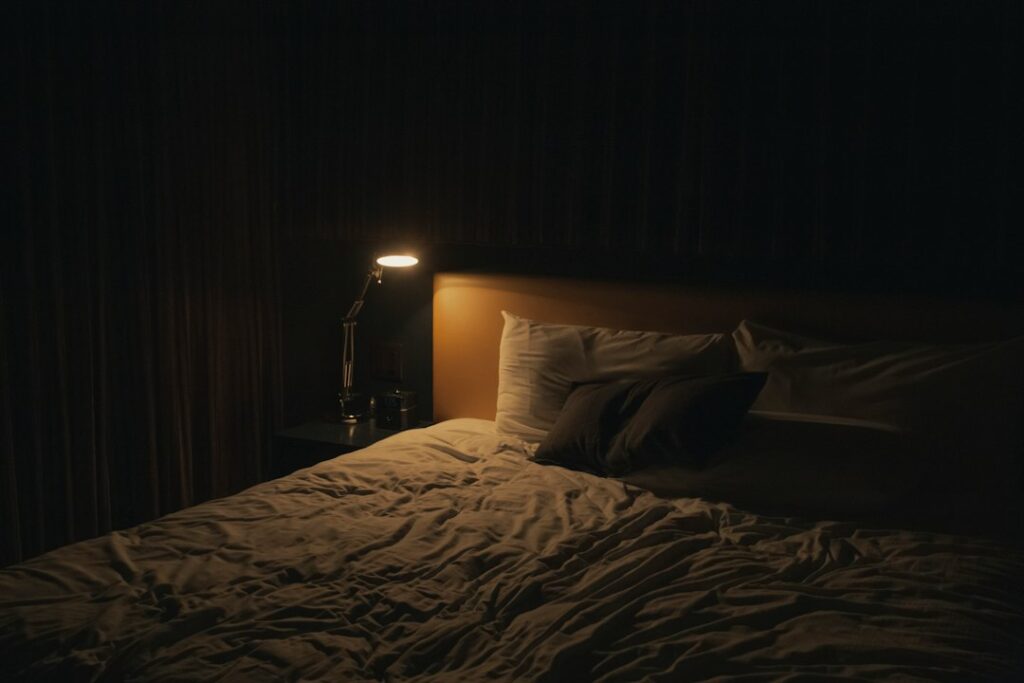
Being exhausted after travel does not guarantee easy sleep. You can feel physically tired while your body clock, alertness signals and environment are still working against bedtime.
Jet lag can separate tiredness from sleep timing
After crossing time zones, your internal clock may still think it is daytime when the local clock says midnight. That mismatch can produce the frustrating combination of fatigue and wakefulness.
Long naps can reduce sleep pressure
If you slept for several hours after arrival, you may have removed much of the sleep pressure needed at night. Shorter naps are generally easier to fit into a recovery plan. See our post-flight nap guide.
Late caffeine can stay with you
Coffee used to survive the airport or transfer may still be active at bedtime. If you are trying to adapt to local time, keep caffeine earlier in the local day.
The room itself may be unfamiliar
Noise, temperature, pillows and bright lights can all make hotel sleep lighter. Our hotel sleep guide covers practical fixes.
What to do tonight
Keep lights low, avoid chasing sleep with more alcohol, and use a quiet activity if you are wide awake. Tomorrow, use daylight and regular meal timing to reinforce local time.