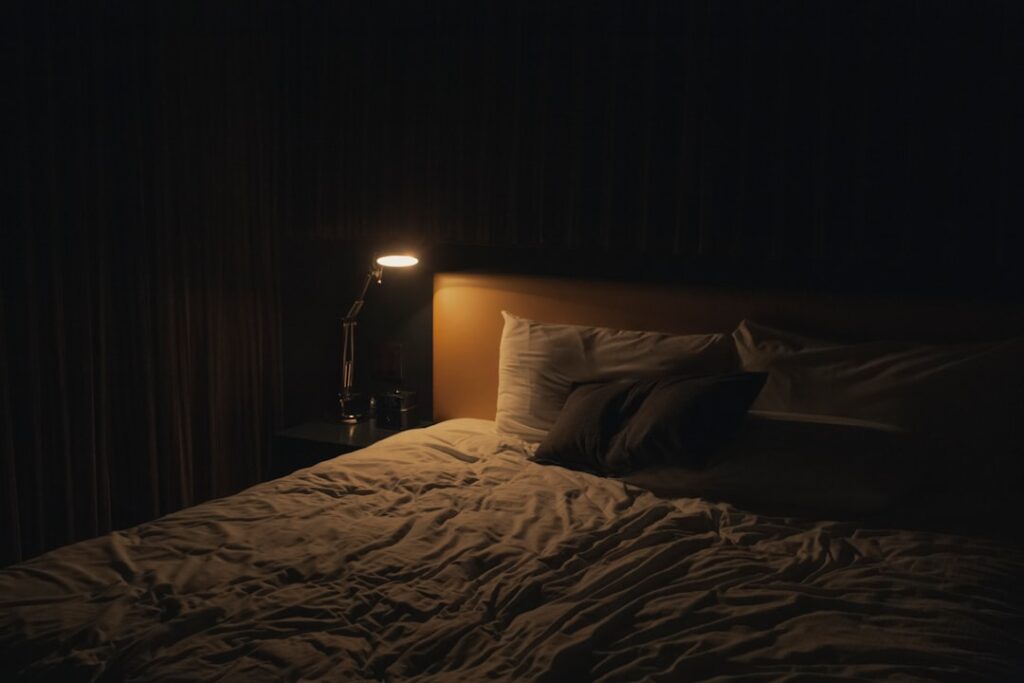
Hot weather can make it harder to fall asleep and stay asleep. The goal is not to create an icy room at any cost; it is to reduce heat load enough that your body can settle comfortably.
Cool the room before bedtime
Close curtains during the hottest part of the day, then use air conditioning or safe ventilation when available. Cooling the room early is often easier than trying to fix it after you are already in bed.
Choose lighter bedding
Heavy blankets and heat-trapping sleepwear can make a warm room feel worse. Use breathable, lightweight layers that can be adjusted easily.
Use airflow wisely
A fan can improve comfort even if it does not dramatically lower room temperature. Keep equipment positioned safely and avoid creating trip hazards around the bed.
Hydrate during the day
Drink regularly while awake rather than trying to catch up with a large amount right before bed, which may increase nighttime bathroom trips.
Move hard exercise earlier if heat lingers
If an intense late workout leaves you very hot at bedtime, experiment with earlier training or an easier evening session.
For broader sleep habits, see sleep hygiene tips.
When heat becomes a safety issue
Extreme heat can cause serious illness. Confusion, fainting, severe weakness or inability to cool down require urgent attention.