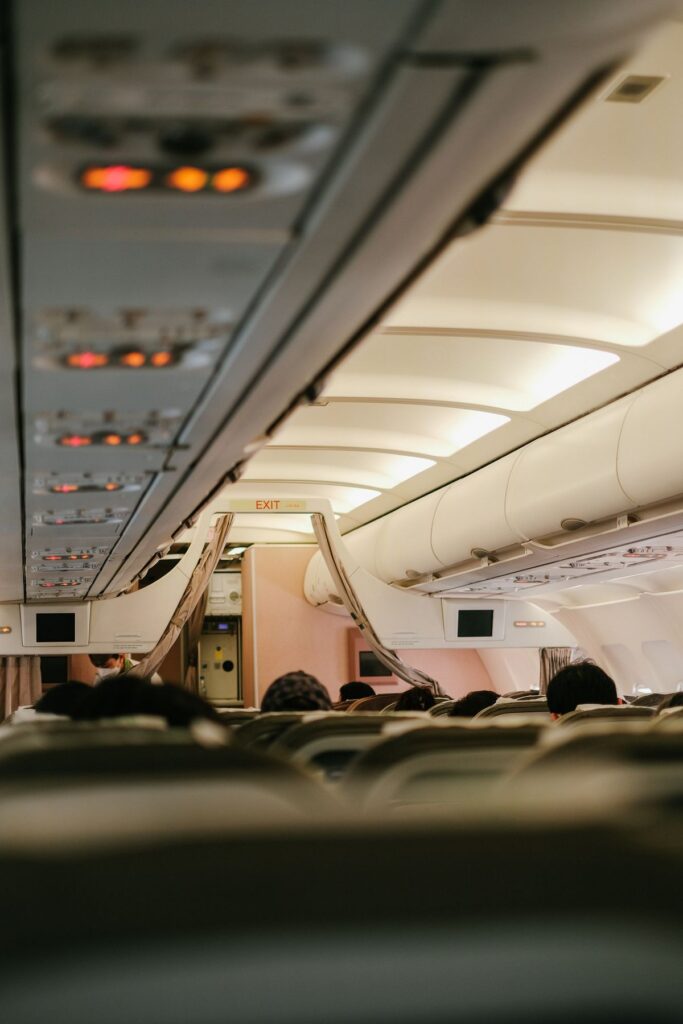
Quick answer: For a long flight, wear breathable clothes with room to move, add light layers for changing cabin temperature, and choose shoes that remain comfortable if your feet feel slightly puffy. Comfort is the goal; clothing alone does not prevent blood clots.
Dress in layers
Cabins can feel warm during boarding and cool later in the flight. A breathable base layer plus a removable sweater, overshirt, or light jacket gives you more control than one bulky item.
Avoid restrictive clothing
Very tight waistbands, rigid denim, or accessories that dig into the body can become uncomfortable after hours of sitting. Choose clothes that allow you to change position easily.
Choose practical shoes
Wear shoes that are comfortable for airport walking and easy to manage at security. Feet can feel slightly swollen after prolonged sitting, so shoes that are already tight before boarding are unlikely to improve during the flight.
What about compression socks?
Graduated compression stockings are different from ordinary tight socks. They may be recommended for some travelers at increased risk of blood clots, but sizing and suitability matter. They are not required for every traveler.
Carry one small backup
On very long itineraries, a clean shirt, socks, or underwear can make a connection or delayed arrival much more comfortable without taking much space.
Think about the destination too
If you are landing in a very hot or cold climate, keep one easy-to-reach layer that works for the arrival. You should not have to unpack your entire carry-on at the gate.
Comfort does not equal medical prevention
Loose clothing may make sitting more comfortable, but it does not guarantee protection from deep vein thrombosis. For long-distance travel, movement and individual risk factors matter more.
Related Tranquilla guides
- Swollen Feet After Flying
- What to Do on a Long Flight
- How to Recover After a Long Flight
- How to Sleep on a Plane
Start with the fabric, not the travel trend
Long-haul clothing does not need to look like specialized “airport wear.” The most useful pieces are usually ordinary clothes that stay comfortable when you sit for several hours. Soft cotton blends, merino wool, technical fabrics designed to manage sweat, and lightweight knits can all work. The best choice depends on how warm you run, how much walking your airport requires, and what feels good against your skin.
Avoid trying a brand-new fabric or tight outfit for the first time on a twelve-hour travel day. Seams, waistbands and labels that feel insignificant at home can become irritating after several hours in the same position.
What kind of trousers work best?
Choose trousers that let you bend your hips and knees without digging into the waist or back of the legs. Joggers, soft travel trousers, relaxed chinos, leggings that are not excessively compressive, or stretchy jeans can all be reasonable options. There is no medical advantage to one specific style for a healthy traveler.
The practical test is simple: sit down in the clothes for ten minutes before packing. If the waistband already feels restrictive or the fabric bunches behind your knees, it is unlikely to become more comfortable halfway through the flight.
What should you wear on top?
A short-sleeved or lightweight long-sleeved base layer works well under something removable. A cardigan, zip layer or light fleece can be easier to manage than a bulky pullover because you can adjust it without disturbing the passenger beside you.
If you plan to sleep, choose a neckline and hood arrangement that does not bunch behind your head. Large hoods, stiff collars and decorative hardware can press into the neck when you lean against the seat.
Underwear and support layers
Breathable underwear with flat seams can reduce friction during a long travel day. If you wear a bra, choose one you already know is comfortable for extended sitting; an underwire or band that feels tight at home may become distracting after many hours. A soft sports bra or wire-free option may suit some travelers, but personal comfort matters more than a universal rule.
If you use medical support garments for a health condition, follow the instructions you were given rather than substituting ordinary tight clothing.
Socks: simple is usually enough
Ordinary clean socks should fit without leaving a painful band around the lower leg. Moisture-managing fabric may be useful if your feet sweat during airport walking. Pack a spare pair for a very long itinerary, especially if you have an overnight connection or expect to change shoes after arrival.
Do not confuse ordinary tight socks with graduated medical compression. Compression stockings are designed to apply specific pressure and need appropriate sizing.
When compression stockings may be relevant
Long-distance travel is associated with a small increase in blood-clot risk, and risk is higher for some people because of factors such as a previous clot, recent surgery, pregnancy, active cancer, limited mobility or certain medications. The CDC guidance on blood clots and travel explains that individual risk factors matter.
Graduated compression stockings can be useful for some travelers, but they should fit correctly and are not a substitute for movement. If you have significant circulation disease, leg wounds or another condition affecting the legs, ask a healthcare professional whether compression is appropriate before using it.
For more detail, read our compression socks for long flights guide.
Choosing shoes for the airport and cabin
Your travel shoes need to handle more than sitting. Airports can involve long walks, standing in queues and carrying luggage. Choose a pair that is already broken in, has enough room around the toes and stays secure on your feet.
Slip-on shoes can be convenient at some security checkpoints, but convenience should not come at the expense of support if you have a long walk through terminals. If you remove shoes during the flight, make sure you can put them back on easily before landing. Feet may feel slightly fuller after hours of sitting.
Should you take your shoes off on a long flight?
If the airline permits it and you remain considerate of other passengers, removing shoes while seated may feel comfortable. Keep socks on, keep the area around your feet clean, and put shoes back on before walking around the cabin. Bare feet in the aisle or restroom are not a good hygiene or safety choice.
If your shoes become painfully tight because of significant swelling, assess the rest of your symptoms as well. Mild puffiness in both feet is common, but sudden one-sided swelling, warmth, redness or calf pain needs medical attention.
What to wear on an overnight flight
For an overnight flight, prioritize pieces that do not twist, dig in or overheat when you recline. A soft base layer, relaxed trousers, clean socks and a light removable layer are usually enough. You do not need to dress exactly as you would for bed.
An eye mask and earplugs often influence sleep more than clothing does. See our overnight-flight sleep timing guide and how to sleep on a plane for a fuller plan.
What to wear when the destination climate is very different
If you are leaving a cold country and landing somewhere hot, use layers that can be removed before arrival. Keep a lightweight shirt or breathable top near the top of your personal item rather than buried in checked luggage. For the opposite situation, pack a warm layer, closed shoes and any weather protection you will need as soon as you leave the terminal.
Changing one layer in an airport restroom before the final connection can be more comfortable than wearing the destination outfit for the entire journey.
Airport security considerations
Security procedures vary by country and airport. Clothing with many large metal accessories, oversized belts or complicated boots can slow screening. If you know you will pass through multiple checkpoints, simple clothing and easily managed outer layers can make the process smoother.
Keep travel documents, medication and valuables in your bag rather than relying on loose clothing pockets that you may empty repeatedly at checkpoints.
What to pack as a clothing backup
You do not need a second full outfit in your personal item for every trip. A small backup can make delays much easier to handle. Consider clean underwear, socks and one lightweight top. On an overnight or multi-connection itinerary, those three pieces can make a large difference without taking much space.
If checked luggage is delayed, a compact backup also gives you time to reach your accommodation before buying anything else.
Clothing for people with sensitive skin
If you have eczema, contact dermatitis or easily irritated skin, wear fabrics and laundry products you already tolerate. A long travel day is not a good time to test a heavily fragranced fabric spray or a new compression garment. Friction, heat and dry cabin air can make existing irritation more noticeable.
Pack any prescribed skin treatment in your carry-on and follow airport rules for liquids. Our dry skin on a plane guide covers skin comfort in more detail.
What not to wear just because social media recommends it
Travel content often promotes highly specific “airport uniforms.” There is no need to buy a matching set, expensive travel shoes or specialized clothing to fly comfortably. A familiar outfit that lets you move, regulate temperature and walk through the airport safely is usually enough.
Likewise, very tight shapewear is not a substitute for medical compression and may simply become uncomfortable after hours of sitting.
A practical outfit formula
For many travelers, a simple combination works well:
- A breathable T-shirt or lightweight long-sleeved top.
- Relaxed trousers with some stretch.
- Clean, comfortable socks.
- Well-fitting walking shoes.
- A removable sweater, cardigan or light jacket.
- One compact clothing change in the personal item for very long trips.
This formula is deliberately ordinary. The goal is to make the journey easier, not to create another packing project.
Movement matters more than the perfect outfit
Comfortable clothing can make it easier to move your ankles, change position and stand when safe. Those behaviors matter more for circulation than a particular fabric or brand. During long flights, use seated ankle movements and walk periodically when cabin conditions allow.
Our in-seat circulation exercises and guide to getting up during a long flight provide practical routines.
Frequently asked questions
Are jeans bad for long flights?
No. Stretchy, well-fitting jeans can be comfortable. Rigid or tight denim may become less pleasant after several hours, so test the fit while seated before choosing them.
Should I wear compression leggings?
Ordinary compression-style clothing is not the same as medically graduated compression stockings. If clot prevention is the goal, use guidance appropriate to your individual risk rather than assuming any tight garment provides the same effect.
Is it better to wear sandals?
Sandals can be comfortable in warm weather but may provide less protection while moving luggage through a busy airport. Choose footwear based on the whole travel day, not only the time spent in the seat.
Should I bring pajamas?
You can, but they are not necessary. Soft travel clothes can work for sleeping and save space. If changing into sleepwear helps your routine and you have room, it is a preference rather than a requirement.
What should I wear if my feet usually swell?
Choose shoes with enough room and avoid painfully tight sock bands. Mild swelling in both feet can occur after prolonged sitting. Recurrent or significant swelling, especially if one-sided, should be discussed with a healthcare professional.
Bottom line
The best long-flight outfit is breathable, flexible, layered and familiar. Wear shoes that can handle airport walking, keep a removable layer within reach and avoid anything that already feels restrictive before boarding. Clothing can improve comfort, but movement and individual medical precautions matter more for circulation.
People with circulation problems, a previous blood clot or other important risk factors should ask a healthcare professional about individualized travel precautions.