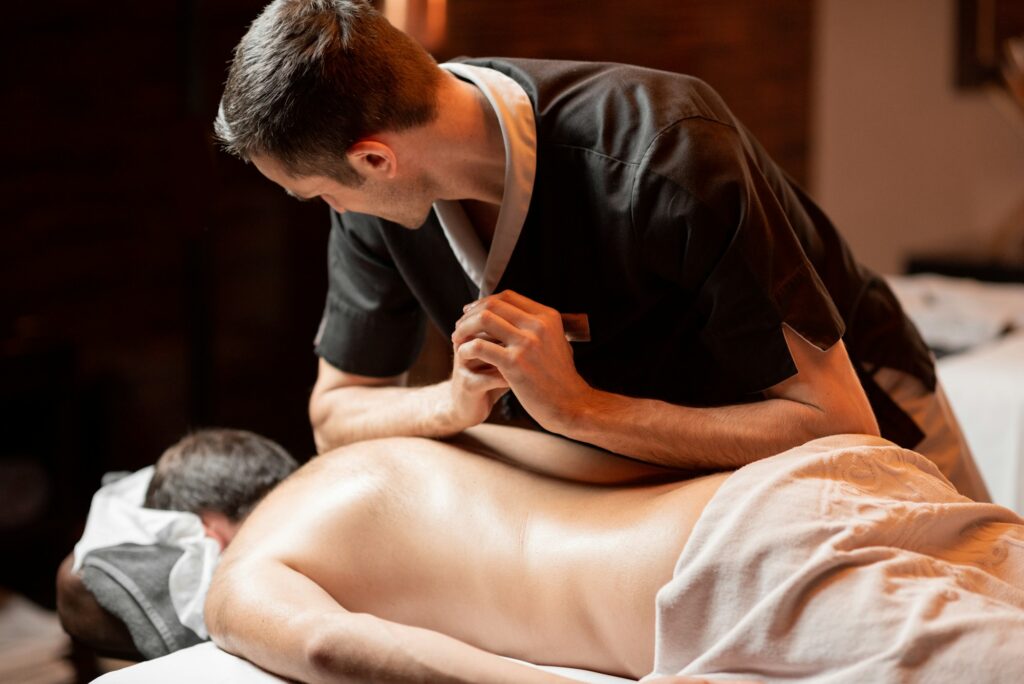
Massage can fit both before and after exercise, but the style and goal should be different. A short, lighter session before activity may help you feel mobile and ready to move, while a relaxing session after exercise may be more suitable for recovery and comfort.
Massage before exercise
Before a workout or event, keep massage relatively brief and avoid very deep pressure that leaves the muscles sore. The goal is usually to feel loose, warm, and comfortable rather than deeply relaxed.
Massage after exercise
After training, massage may help you relax and may reduce the feeling of muscle tightness for some people. It should not be used to hide sharp pain or a suspected injury.
What about delayed muscle soreness?
Massage can sometimes improve how sore muscles feel, but it does not replace sleep, nutrition, hydration, and sensible training loads. See our guide on muscle soreness after exercise.
When to avoid massage
Avoid massage over an acute injury, significant swelling, open wounds, or areas where a blood clot is suspected. Seek medical assessment when pain is severe or unusual.
What massage can and cannot do around exercise
Massage can change how muscles feel, help you relax, and make some people feel less stiff. What it does not do is replace a proper warm-up, repair a serious injury, or guarantee faster athletic recovery. The best timing depends on whether your goal is readiness before activity, relaxation afterward, or simply comfort between training sessions.
Think of massage as one tool among many. Sleep, food, hydration, progressive training, and adequate recovery days usually matter more to long-term performance.
How massage should feel before exercise
Before activity, the session should usually be lighter and more stimulating than a deep relaxation massage. The aim is not to make the muscles tender. Short, rhythmic techniques may help you feel ready to move, but the warm-up itself should still include the movements you are about to perform.
If you are about to run, lift weights, or play sport, spend time on an activity-specific warm-up after the massage rather than assuming massage alone has prepared the body.
How long before exercise should you get a massage?
If massage is part of the same-day routine, shorter and lighter is usually more practical. A long, deep session immediately before intense training can leave some people feeling relaxed, heavy, or sore. If you prefer deeper massage, schedule it farther away from a demanding workout and observe how your body responds.
Massage after exercise
After training, massage is often used for relaxation and perceived soreness. Pressure does not need to be aggressive. Muscles that have just completed a hard workout may feel sensitive, so a moderate or gentle session can be more comfortable than very deep work.
If you are dehydrated, overheated, or exhausted after exercise, address basic recovery needs first. Cool down, drink according to thirst, eat when appropriate, and let your heart rate settle.
Can massage reduce DOMS?
Delayed-onset muscle soreness, or DOMS, often peaks one to three days after unfamiliar or demanding exercise. Massage may reduce how sore muscles feel for some people, but it does not erase the training stress that caused the soreness. Time, sleep, nutrition, and gradual adaptation still matter.
Our muscle soreness recovery guide explains what normally helps and when soreness may be more than ordinary DOMS.
Should you get a deep tissue massage after a hard workout?
Not automatically. Deep pressure on already sore tissue can feel unpleasant and may make tenderness more noticeable. Tell the therapist when you trained, what type of exercise you did, and which areas are sore. Pressure can then be adjusted accordingly.
Stronger pressure is not proof of a better treatment. The session should stay within a level that feels safe and tolerable.
Massage after strength training
After heavy lifting, the trained muscles may be fatigued and sensitive. A gentle session later that day or on a recovery day may feel relaxing. If you are using massage between strength sessions, avoid letting treatment soreness interfere with your next workout.
If you are new to lifting, our beginner strength training guide covers basic progression and recovery.
Massage after running or long walks
Runners and walkers often request work on calves, thighs, glutes, or feet. A lighter session after a long effort may feel good, but unexplained swelling, sharp pain, or one-sided calf symptoms should not be massaged without assessment.
For general post-walking soreness, see our sore legs after walking guide.
Massage before a competition
Competition day is not the best time to experiment with a new massage style. If you know that a short light session helps you feel prepared, keep it familiar. Avoid unusually deep work, long static relaxation, or techniques that leave soreness when performance is the priority.
Massage on a rest day
A rest or easy day is often the simplest time for a longer massage because you are not trying to perform immediately afterward. This gives you room to choose a more relaxing pace and see how your body responds before the next hard session.
How session length changes the choice
A 20–30 minute focused massage may fit well before activity or after a specific workout. A 60-minute session is more versatile, while 90 minutes is usually better suited to a dedicated relaxation or recovery day than directly before demanding exercise.
See our massage session length guide for a comparison of 30, 60, and 90 minutes.
When massage is not the right next step
Do not use massage to push through signs of injury. Severe pain, sudden loss of strength, major swelling, inability to bear weight, suspected fracture, open wounds, fever, infection, or possible blood-clot symptoms need appropriate medical assessment.
A therapist should also be told about recent surgery, anticoagulant medication, pregnancy, skin conditions, and other relevant health issues before treatment.
A simple decision guide
- Before exercise: short, light, and followed by an active warm-up.
- Immediately after exercise: gentle, comfortable, and focused on relaxation rather than aggressive pressure.
- On a recovery day: more time and deeper work may be appropriate if it feels good and there are no contraindications.
- With sharp or unexplained pain: get assessed instead of using massage to mask symptoms.
Frequently asked questions
Is massage better before or after a workout for flexibility?
Massage may temporarily change how flexible or loose you feel, but a proper warm-up and regular mobility work are more directly related to movement preparation. Do not depend on massage alone to create usable range of motion.
Can I work out right after a massage?
After a short light massage, many people can exercise normally. After a long or deep session, you may prefer easier activity because you can feel relaxed or tender.
Should I massage sore muscles every day?
Not necessarily. More treatment is not automatically better. Use comfort and recovery as guides, and avoid repeatedly working painful tissue without understanding why it is sore.
Does massage remove lactic acid?
The common claim that massage “flushes lactic acid” is an oversimplification. Lactate is processed by the body relatively quickly after exercise. Massage may still help relaxation and perceived soreness without needing that explanation.
Frequently asked questions
How soon after exercise can you get a massage?
There is no single required waiting period after a normal workout. Many people prefer to cool down, rehydrate, and let heart rate settle before a massage. If the session was unusually hard or you feel nauseated, lightheaded, or overheated, give yourself more recovery time first.
Can massage replace a warm-up?
No. Even if a short pre-exercise massage helps you feel looser, you should still use an activity-specific warm-up before training or competition.
Should massage hurt to be effective?
No. Strong pressure is not automatically more effective. Excessive pressure can leave you sore and may be counterproductive, especially close to exercise.
Bottom line
Use lighter, shorter massage before exercise and a more relaxing approach after exercise. Match the pressure and timing to how your body feels and what you are trying to achieve.