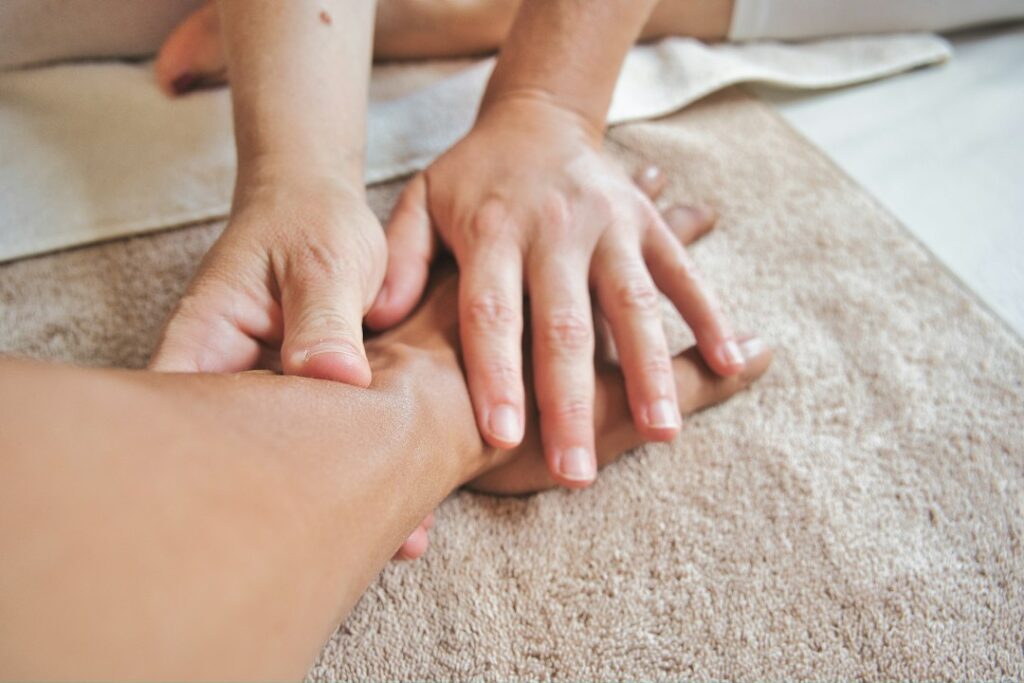
Gentle calf self-massage can help ordinary muscle tightness feel more comfortable, especially after walking or standing. The key is light-to-moderate pressure and knowing when calf pain may need medical evaluation instead.
A simple approach
Sit comfortably with the leg supported. Use your palms or fingers to make slow strokes from the ankle upward toward the knee without pressing directly behind the knee. For a tight area, use small circles and moderate pressure rather than digging aggressively.
How long?
A few minutes per calf is usually enough for relaxation. Stop if pressure causes sharp pain, numbness, tingling or worsening symptoms.
After exercise
Massage can be part of a recovery routine, but hydration, food, sleep and sensible training volume matter too. See our sore legs after walking guide.
When you should not massage the calf
Do not massage a calf that is suddenly swollen, hot, red or very tender, especially on one side. Those symptoms can occur with a blood clot and require urgent medical assessment. Also avoid massage over an acute injury, open wound, infection or recent surgery unless a clinician has cleared it.
Can you use a massage ball or foam roller?
Yes, but keep the pressure controlled. A soft ball against the wall or a foam roller under the calf can provide broader pressure than fingertips. Move slowly and avoid spending a long time on one very tender spot. Stop if you develop tingling, numbness, sharp pain or worsening discomfort.
Should you massage toward the heart?
For ordinary relaxation massage, slow strokes upward from the ankle toward the knee are commonly used. You do not need to forcefully “push fluid” or try to treat swelling yourself. Unexplained or one-sided swelling should be medically assessed before massage.
What if your calves feel tight after walking?
Tight calves after a longer-than-usual walk may reflect fatigue, hills, footwear, pace or a sudden increase in activity. Gentle massage can be combined with easy walking, rest and a gradual return to normal training rather than repeatedly using deeper pressure.
Pressure should not equal pain
Strong pressure is not automatically more effective. A massage should feel tolerable and controlled. If calf tightness keeps returning, look at walking volume, footwear and mobility instead of repeatedly pressing harder. If symptoms follow a long flight, also review our guide to swelling after flying before assuming the problem is muscular.
A five-minute calf self-massage routine
- Sit with the lower leg supported and the calf relaxed.
- Use both hands to make several light strokes from the ankle toward the knee.
- Gently squeeze and release the larger calf muscle without pinching the skin.
- Use small circles over areas that feel generally tight, staying below the back of the knee.
- Finish with a few ankle pumps and an easy walk if comfortable.
The routine should feel soothing. If the calf becomes more painful, swollen or sensitive, stop rather than adding pressure.
What areas should you avoid?
Do not press deeply directly behind the knee, over prominent veins that are painful or inflamed, over bruises or fresh injuries, or across open or infected skin. If you have reduced sensation from a neurological condition, use extra caution because it may be harder to judge pressure accurately.
Calf massage after running or walking
After ordinary exercise, gentle massage may help the legs feel less stiff. It works best as one part of recovery rather than a replacement for appropriate training progression. A sudden jump in walking or running volume, steep hills or different footwear can all leave the calves more tired than usual.
If soreness is mild and affects both legs in a way that matches recent activity, easy movement and time may be enough. If pain is sharply localized, began suddenly or changes the way you walk, consider whether an injury needs assessment.
Should you stretch after calf massage?
You can use gentle calf stretching if it feels comfortable, but do not force a painful stretch. Massage and stretching have different purposes, and neither needs to be intense. A brief easy walk may also help the calf move through a normal range after sitting.
Massage after a long flight
Be especially cautious with new calf symptoms after prolonged travel. Mild stiffness in both legs can occur after sitting, but one-sided swelling, warmth, redness or unexplained calf pain can be signs of a blood clot. Do not try to massage those symptoms away. Seek prompt medical evaluation, particularly if there is also chest pain or sudden shortness of breath.
When recurring tightness needs a closer look
If the same calf repeatedly feels tight despite reasonable changes in activity, footwear and recovery, a clinician or physiotherapist can help assess strength, mobility, training load and other possible causes. Persistent symptoms are more useful to investigate than to repeatedly treat with stronger self-massage.
Bottom line
For ordinary muscle fatigue, calf self-massage should be simple and comfortable: slow strokes, gentle kneading and a few minutes of moderate pressure. Avoid aggressive work on acute injuries or unexplained swelling, and treat one-sided post-travel calf symptoms as a medical issue rather than a massage problem.