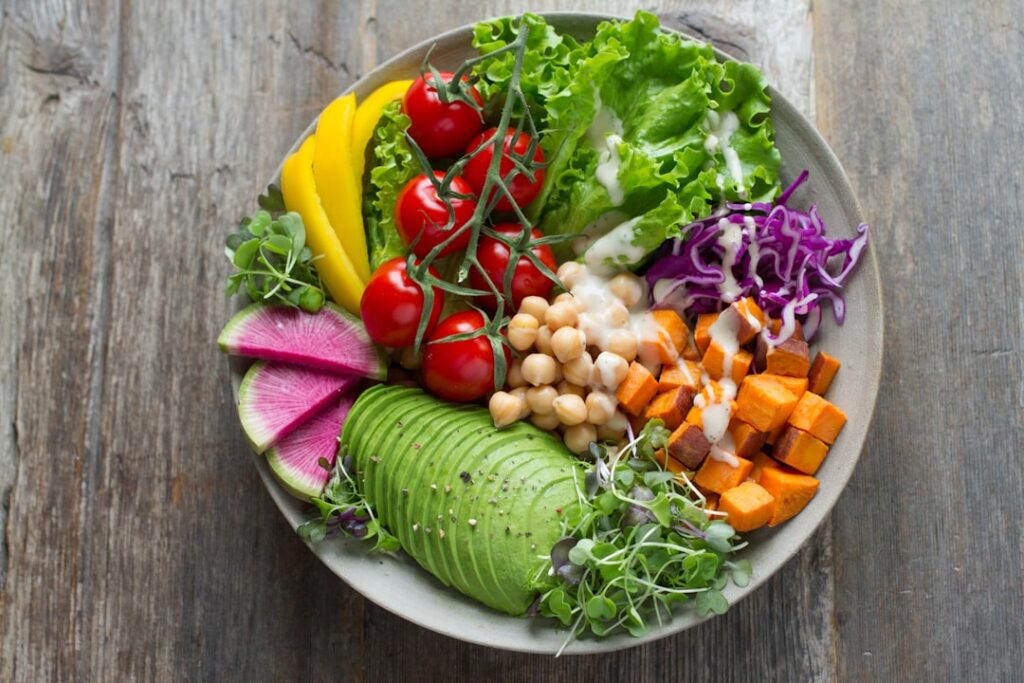
Fiber-containing foods can come from ordinary grocery staples. Start by looking at the meals you already eat and identifying one realistic addition or substitution. You do not need to build an unfamiliar menu around an expensive product.
Which foods provide fiber?
NIDDK lists whole grains, legumes, fruits, vegetables and nuts as useful sources. Examples include oatmeal, lentils, chickpeas, berries, pears, broccoli and almonds. It advises introducing fiber gradually so your body can get used to the change, and discussing individual needs with a health professional. Source: NIDDK fiber and food guidance.
The amount varies by food and portion. This guide offers meal ideas rather than a ranked nutrient table or a treatment for constipation.
Start with one meal
Choose breakfast, lunch or dinner based on where a change is easiest. Someone who already prepares oats might add a fruit they enjoy. Someone who often buys lunch may find it more practical to look for a meal containing beans than to begin cooking three new recipes.
Keep the change recognizable. Adding one ingredient to a familiar meal is a different task from replacing your entire eating pattern.
Three original meal-building ideas
- A breakfast bowl: use familiar oats with a fruit you already buy.
- A lunch filling: try a bean or chickpea filling in a sandwich or wrap you enjoy.
- A dinner component: include a vegetable side or lentil dish that fits the rest of the meal.
These are flexible combinations, not nutritionally complete meal plans. Adjust ingredients for allergies, preferences, access and any dietary restrictions.
Make the shopping list specific
Instead of writing “eat more fiber,” list the exact food, the meal it is for and how you will prepare it. A bag of unfamiliar ingredients is less useful than one item with a clear place in the week.
If you buy a packaged version, compare the fiber amount for equivalent servings. Note whether the product is something you will actually use before choosing it solely for one number.
Avoid the all-at-once approach
There is no need to stack a new cereal, several legumes and multiple fiber supplements into one day because a headline says more is better. Use gradual changes and seek advice when a medical condition affects what you should eat.
Persistent digestive symptoms should not be managed only by following a food list. This article helps with ordinary meal planning; it cannot identify the cause of pain, bleeding or a major change in bowel habits.
A grocery plan built around food you will use
Choose one row below that fits a meal you already enjoy. These are flexible planning ideas, not a nutrient ranking or a complete diet. Preparation, serving size and packaged ingredients can change the fiber amount.
| Food | A practical use | Check before buying |
|---|---|---|
| Oats | Use in a breakfast you already prepare | Compare like-for-like servings on packaged products |
| Lentils | Add a lentil dish or soup to a familiar meal | Whether the product is dry or ready to use |
| Beans or chickpeas | Use in a wrap, salad or lunch filling | Ingredients, serving size and any dietary restrictions |
| Pears or berries | Choose as a fruit you enjoy | Quantity you are likely to use before it spoils |
| Broccoli or another familiar vegetable | Include as a side | Fresh or frozen options that suit your cooking |
| Almonds or another suitable nut | Use with a meal or snack | Allergies, ingredients and portion information |
These food groups and examples are consistent with NIDDK’s food guidance. Introduce changes gradually and follow individual advice if a health condition restricts what you can eat.
Your one-change shopping note
Meal: ________
Food I will use: ________
How I will prepare it: ________
Where leftovers will fit: ________
Example: “Lunch; chickpeas; add to a familiar wrap; use the rest in tomorrow’s planned meal.” Follow the product’s storage instructions and our meal-prep food-safety guide.
Do I need a supplement to get started?
This exercise starts with ordinary food. It does not establish whether a supplement is needed for you. Compare options you can afford and enjoy, and ask a professional about persistent symptoms or prescribed dietary restrictions.
Related reading
- Plant Protein Foods: A Beginner’s Guide to Everyday Options
- How to Read a Nutrition Label: A Simple US Grocery Guide
- Explore all wellness guides
Prepared for Tranquilla Wellness with AI assistance. Sources checked September 13, 2026. General education; no independent clinical review is claimed. Read our editorial standards.
Featured photo: Anna Pelzer / Unsplash.