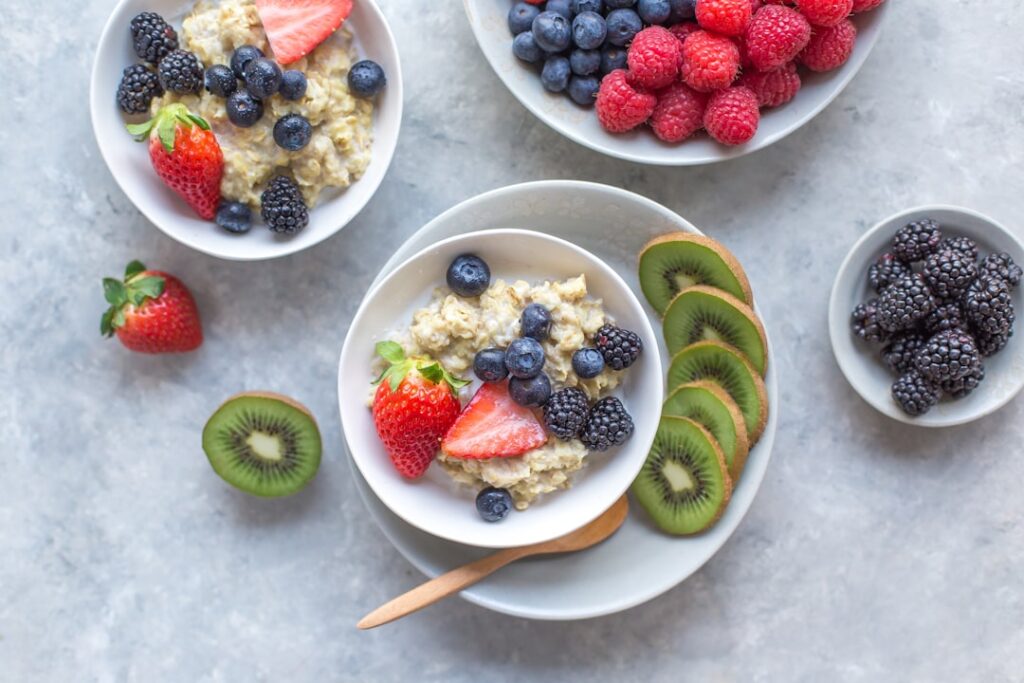
Quick answer: High-fiber breakfast foods include oats, bran cereals, whole-grain bread, berries, pears, apples with skin, chia or flax seeds, nuts, beans, and some high-fiber wraps. The easiest strategy is to combine one whole-grain food with fruit and, when it suits you, nuts, seeds, or legumes.
Fiber supports normal digestion and can help make meals more filling. But increasing fiber very quickly can cause gas or bloating, especially if your usual intake is low.
Why breakfast is a useful time to add fiber
Breakfast is often built around grains and fruit, two food groups that can provide meaningful fiber. Small changes—such as replacing refined cereal with oats or adding berries—can raise intake without requiring a completely different diet.
1. Oatmeal
Oats provide soluble fiber and are easy to combine with fruit, nuts, seeds, yogurt, or milk. Choose plain oats when you want more control over added sugar.
2. High-fiber cereal
Check the nutrition label rather than assuming a cereal is high in fiber because it looks healthy. Compare fiber, added sugar, and serving size.
3. Berries
Raspberries and blackberries are especially fiber-rich, but any whole fruit can contribute. Frozen fruit is useful when fresh produce is expensive or out of season.
4. Pears and apples
Keeping the edible skin on fruit generally preserves more fiber. Slice fruit into oats or yogurt, or eat it on the side.
5. Whole-grain toast
Look for a product where whole grain appears prominently in the ingredient list. Pair it with eggs, nut butter, cottage cheese, or avocado depending on your goals and preferences.
6. Chia and flax
Seeds can add fiber in a small volume. Start with modest portions if you are not used to them, and drink normally.
7. Beans at breakfast
Beans do not have to be a lunch-only food. Breakfast burritos, beans with eggs, or savory bowls can provide both fiber and protein.
What makes a breakfast high fiber?
There is no universal threshold that applies to every country’s labeling system. Rather than relying on front-of-package marketing, read the nutrition facts panel and compare similar products.
Five easy breakfast combinations
- Oatmeal with berries, chia seeds, and yogurt.
- Whole-grain toast with peanut butter and a pear.
- High-fiber cereal with milk or fortified soy drink and fruit.
- Breakfast burrito with beans, eggs, and vegetables.
- Greek yogurt with berries, oats, nuts, and ground flax.
Fiber and protein work well together
A breakfast does not need to focus on only one nutrient. Pairing fiber-rich foods with protein can make the meal more satisfying. Examples include oats plus yogurt, whole-grain toast plus eggs, or beans plus eggs or tofu.
How much fiber do adults need?
Needs vary by age and sex. NIDDK notes that adult targets commonly fall in the range of about 22 to 34 grams per day. You do not need to get all of that at breakfast.
Why increasing fiber too fast can backfire
If your normal diet is low in fiber, suddenly adding large servings of bran cereal, beans, chia, and raw fruit can increase gas and bloating. NIDDK recommends increasing fiber gradually so the digestive system can adapt. Fluids also matter because fiber interacts with water in the gut.
When a high-fiber breakfast may not be right
Some gastrointestinal conditions, bowel procedures, or medical diets require temporary or long-term fiber modification. If a clinician has told you to follow a low-fiber or low-residue diet, generic high-fiber advice does not apply.
FAQ
What is the easiest way to add more fiber at breakfast?
Combine two or three modest sources: oats plus berries, whole-grain toast plus fruit, or a higher-fiber cereal plus nuts or seeds. Exact amounts vary by product, so use the nutrition label if you are tracking closely.
Is fruit juice a high-fiber breakfast food?
Usually not compared with whole fruit. Juicing removes or reduces much of the fiber found in intact fruit.
Can too much fiber make bloating worse?
Yes, especially if intake rises suddenly. Increase gradually and notice which foods you tolerate best.
Related Tranquilla guides
- High-Fiber Foods
- Best Foods for Gut Health
- How to Read a Nutrition Label
- Why Do I Feel Bloated After Eating?
Sources
Featured photo: Melissa Belanger / Unsplash.
If you have a gastrointestinal condition that requires a modified-fiber diet, follow individualized advice from your clinician or dietitian.