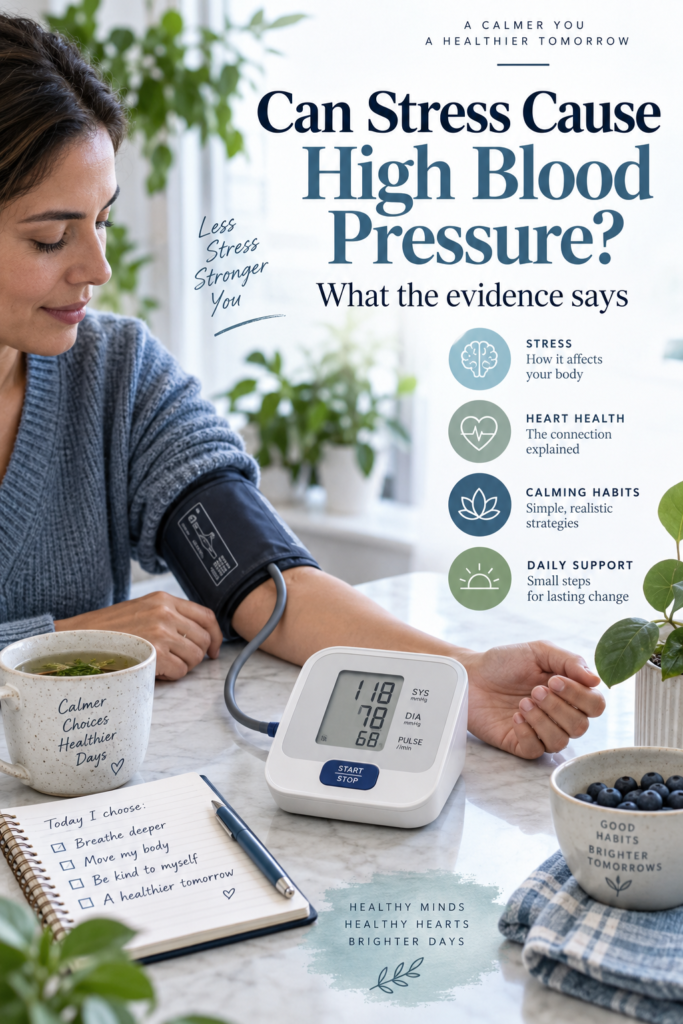
Stress can make your heart beat faster, tighten blood vessels and temporarily raise blood pressure. That does not mean every stressful day causes chronic hypertension, but repeated stress may still matter because it influences sleep, activity, eating, alcohol use and other habits that affect cardiovascular health.
If you already have high blood pressure, stress management can support your overall plan, but it should not replace medication, monitoring or medical care. This guide explains the difference between short-term stress responses and persistent hypertension, plus practical ways to reduce the physical load of stress.
What happens to blood pressure during stress?
When the brain perceives a threat, the sympathetic nervous system becomes more active. Adrenaline can increase heart rate and make blood vessels constrict. Blood pressure may rise for a short period so the body is ready to respond. Once the stressful event passes, blood pressure usually moves back toward baseline.
This temporary rise is different from having hypertension, where blood pressure remains elevated over time. A diagnosis requires repeated measurements and clinical interpretation rather than one stressful reading.
Can chronic stress cause hypertension?
The relationship is complex. Long-term stress may contribute indirectly through behaviors and biological pathways, but it is not the only cause of high blood pressure. Genetics, age, kidney function, sleep apnea, body weight, sodium intake, medications, alcohol and physical activity can all play roles.
That is why someone with high readings should not simply be told to “relax.” Proper evaluation is important.
Stress can affect lifestyle habits
During stressful periods, people often sleep less, exercise less, eat irregularly or rely more on alcohol, nicotine and highly processed foods. These habits can increase cardiovascular risk even if stress itself is not the sole cause. Improving the routine around stress can therefore help in several ways at once.
Sleep is an important connection
Poor sleep can increase sympathetic activity and reduce resilience to stress. People who are exhausted may also use more caffeine, move less and make less consistent food choices. If stress repeatedly disrupts sleep, addressing the sleep problem is part of cardiovascular self-care.
Read how stress affects sleep for practical strategies.
Walking can support blood-pressure control
Regular aerobic activity such as brisk walking can support cardiovascular health and may help improve blood-pressure control over time. You do not need extreme exercise. Consistent moderate activity is often more sustainable than occasional hard workouts.
Our article on walking and blood pressure explains pace, frequency and safety in detail.
Stress-related blood-pressure spikes
Some people see a high reading during a stressful meeting, medical appointment or argument. This can be alarming. One elevated reading does not always mean your usual blood pressure is high. Repeated home measurements taken under standardized conditions can help show the broader pattern.
If readings are extremely high or accompanied by chest pain, severe headache, confusion, weakness or shortness of breath, seek urgent medical care.
How to measure blood pressure more accurately
Rest quietly for several minutes before measuring. Sit with your back supported and feet on the floor. Use the correct cuff size on a bare upper arm. Avoid talking during the reading. Take measurements at similar times when possible and record them rather than reacting to one number.
If your clinician has given you specific monitoring instructions, follow those instead.
Does relaxation lower blood pressure immediately?
Slow breathing or relaxation may reduce temporary stress-related arousal in some people. That can lower heart rate and sometimes blood pressure in the moment. The effect is not a substitute for long-term treatment. Think of relaxation as one supportive tool rather than a medication replacement.
Breathing exercise to try
Sit comfortably and breathe in gently through the nose. Exhale slightly longer than you inhale without forcing deep breaths. Continue for three to five minutes. The goal is to reduce arousal, not to hit a perfect breathing count. Stop if you feel dizzy.
Reduce caffeine if you are sensitive
Caffeine can temporarily raise blood pressure in some people and can worsen anxiety or sleep. If you notice strong effects, try reducing dose or moving caffeine earlier in the day. Do not assume coffee is automatically harmful; sensitivity varies.
Alcohol and stress
Using alcohol to cope with stress can create problems because regular heavy intake may raise blood pressure and disrupt sleep. If alcohol has become a primary coping strategy, reducing intake and discussing support with a healthcare professional can improve both stress management and cardiovascular health.
Weight management without crash dieting
If weight reduction is medically appropriate, gradual sustainable changes are more useful than crash diets. Walking, higher-fiber foods, adequate protein and regular meals can help. Extreme restriction often increases stress and is difficult to maintain.
Sodium and potassium
Some people are sensitive to sodium, and reducing heavily processed high-sodium foods can help blood-pressure control. Potassium-rich foods such as fruits, vegetables, beans and dairy can be helpful for many people, but individuals with kidney disease or certain medications may need potassium limits. Ask your clinician before making major changes if you have kidney or heart disease.
Medication matters
If you take blood-pressure medication, do not stop it because you feel less stressed or get a few lower readings. Improved lifestyle may eventually change medication needs, but that decision belongs with the clinician managing your care.
Stress management that is realistic
Use simple habits you can repeat: short walks, regular sleep timing, fewer late-night work messages, meal planning and brief breathing breaks. Solve practical stressors when possible instead of relying only on relaxation techniques. Financial, relationship or workload problems may need direct solutions and support.
For a broader toolkit, read stress management techniques.
When to see a doctor
Arrange medical review if home readings remain elevated, if you have a family history or other cardiovascular risk factors, or if you are unsure how to interpret your numbers. Seek urgent care for severe symptoms such as chest pain, fainting, sudden neurological changes or extreme readings with symptoms.
Frequently asked questions
Can anxiety raise blood pressure?
Yes, anxiety can temporarily raise blood pressure through the stress response. Persistent high readings should still be evaluated rather than assumed to be anxiety alone.
Can stress cause a hypertensive crisis?
Stress may contribute to very high readings, but hypertensive emergencies are medical conditions that require urgent assessment, especially when symptoms are present.
Does meditation replace medication?
No. Meditation or breathing may support stress management, but prescribed blood-pressure treatment should only be changed with medical guidance.
How long does it take for blood pressure to fall after stress?
It varies. Short-term elevations may settle within minutes to hours, but persistent high blood pressure has other causes and needs proper evaluation.
A practical daily plan for stress and blood pressure
Keep the plan simple enough to repeat. Start the day with your usual medication if prescribed, eat regular meals, take at least one walk, and create two or three short pauses for slower breathing or quiet movement. If you monitor blood pressure at home, measure under consistent conditions instead of repeatedly checking whenever you feel anxious. Constant checking can itself increase worry and make individual readings harder to interpret.
At night, protect sleep by reducing late caffeine, work messages and alcohol. These habits do not replace treatment, but together they can reduce several lifestyle pressures that make blood-pressure management harder.
Bottom line
Stress can temporarily raise blood pressure and may influence long-term cardiovascular health indirectly through sleep and lifestyle. Managing stress is worthwhile, but chronic hypertension is more complex than stress alone. Combine realistic stress management with regular activity, healthy eating, accurate monitoring and appropriate medical care. If readings remain high, work with a clinician rather than assuming stress is the only explanation.