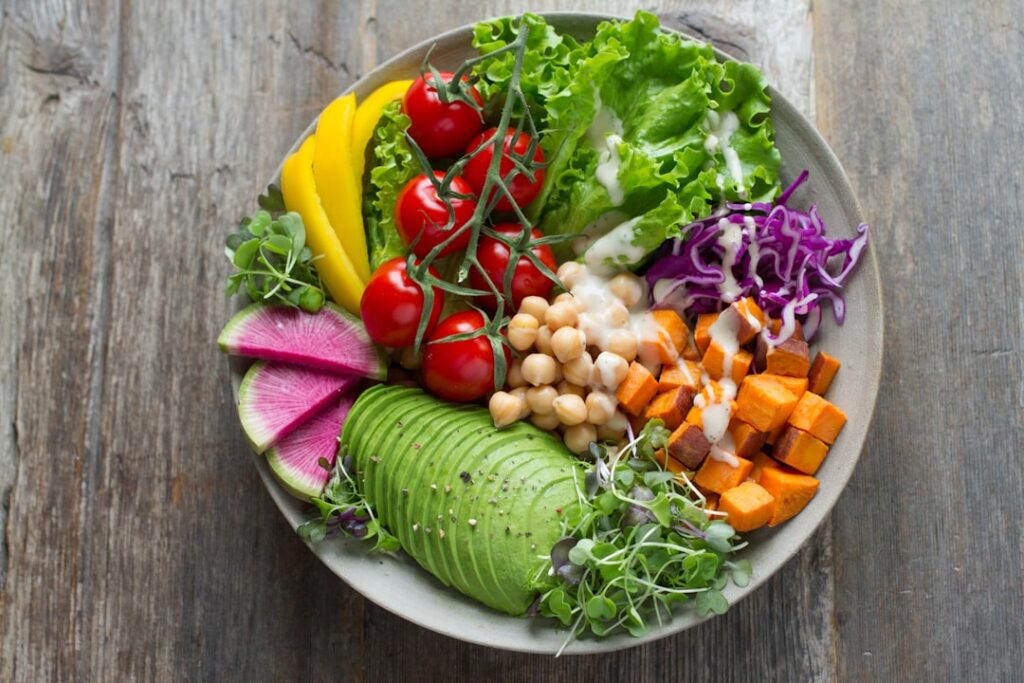
If you feel hungry soon after eating, the issue may not be meal size alone. Meals that combine protein, fiber, healthy fats, and minimally processed carbohydrates often feel more satisfying than meals built mostly around refined starches or sugary snacks.
Start with protein
Eggs, yogurt, fish, chicken, beans, lentils, tofu, and other protein-rich foods can help meals feel more substantial. Spread protein across the day rather than relying on one large serving.
Add fiber
Vegetables, fruit, beans, oats, whole grains, nuts, and seeds add fiber and volume. Fiber slows digestion and can help support steadier fullness.
Include some healthy fat
Olive oil, avocado, nuts, seeds, and oily fish can make meals more satisfying. Portion still matters because fats are energy-dense.
Choose high-volume foods
Soups, vegetables, fruit, and salads can add bulk without requiring very large amounts of energy. Pair them with protein for a more balanced meal.
Example meal ideas
- Greek yogurt with berries, oats, and nuts.
- Eggs with whole-grain toast and vegetables.
- Lentil soup with salad and yogurt.
- Chicken or tofu with vegetables and brown rice.
If hunger feels unusually persistent, see our article on why you may feel hungry all the time and our practical guide to daily protein needs.
Why some meals keep you full longer
Fullness is influenced by more than calories. Protein, fiber, water content, food texture, meal volume, and how quickly you eat all affect how satisfying a meal feels. Two meals with similar calories can produce very different levels of satiety depending on their composition.
For example, a sweet pastry and a bowl of yogurt, oats, berries, and nuts may contain a similar amount of energy, but the second option provides more protein, fiber, chewing, and food volume. Those factors often make it easier to stay satisfied until the next meal.
Protein and satiety
Protein is one of the most reliable nutrients for helping meals feel substantial. It also supports muscle maintenance and recovery. You do not need to rely on protein shakes or unusually high intakes. Regular foods such as eggs, dairy, fish, poultry, legumes, tofu, tempeh, and lean meats can all contribute.
A practical approach is to include a meaningful protein source at breakfast, lunch, and dinner. If your current breakfast is mostly toast, cereal, or fruit, adding yogurt, eggs, milk, cottage cheese, or another protein source may make the meal more filling.
For a broader overview, see our daily protein guide.
Fiber helps in several ways
Fiber adds bulk, slows the rate at which food moves through digestion, and supports gut health. High-fiber foods often require more chewing and take up more space on the plate, which can help meals feel more satisfying.
Useful sources include vegetables, fruit, beans, lentils, oats, barley, whole grains, nuts, and seeds. If your diet is currently low in fiber, increase it gradually and drink fluids according to thirst. A sudden large increase can cause bloating or gas.
Our high-fiber foods guide gives practical ways to add more without changing your entire diet at once.
Healthy fats can improve satisfaction
Fat slows digestion and adds flavor, which can make meals more satisfying. Olive oil, avocado, nuts, seeds, peanut or nut butter, and oily fish are common examples. Because fat is energy-dense, a modest amount is usually enough to improve a meal without turning it into a very high-calorie dish.
The goal is balance. A meal with protein, vegetables, a fiber-rich carbohydrate, and some healthy fat often works better than trying to maximize one nutrient.
Why food volume matters
Foods with a high water content can create a larger portion for a given amount of energy. Vegetables, fruit, broth-based soups, and yogurt are common examples. This can be useful if you prefer physically larger meals.
Volume alone is not enough, though. A huge salad with almost no protein or fat may leave you hungry quickly. Pair high-volume foods with protein and another energy source so the meal is satisfying as well as large.
Choose carbohydrates that work for you
Carbohydrates are not automatically less filling. Oats, potatoes, beans, brown rice, whole-grain bread, and other minimally processed carbohydrate foods can fit well in satisfying meals. The problem is often a meal built almost entirely from refined starch or sugar with little protein or fiber.
Instead of removing carbohydrates, pair them. Toast with eggs and vegetables, oats with yogurt and nuts, or rice with beans and salad are examples of balanced combinations.
Breakfasts that may keep you full longer
- Greek yogurt, berries, oats, and a small handful of nuts.
- Eggs with whole-grain toast and vegetables.
- Oatmeal made with milk, fruit, and seeds.
- Cottage cheese with fruit and whole-grain crackers.
- Beans or lentils with eggs and vegetables if savory breakfasts suit you.
Lunch and dinner combinations
- Chicken, tofu, or fish with vegetables and rice or potatoes.
- Lentil or bean soup with salad and yogurt.
- A grain bowl with beans, vegetables, avocado, and a protein source.
- Whole-grain wrap with chicken or hummus, vegetables, and fruit.
- Pasta with vegetables and a protein-rich sauce rather than pasta alone.
What about snacks?
Snacks can be more satisfying when they combine at least two food groups. Fruit alone may be enough for some people, but pairing it with yogurt, cheese, or nuts can extend fullness. Similarly, crackers with hummus may feel more substantial than crackers by themselves.
You do not need to snack if meals keep you comfortable between eating occasions. Hunger varies from day to day with activity, sleep, menstrual cycle, stress, and meal size.
Eating speed affects fullness
Very fast meals can end before fullness signals have had time to register. Slowing down slightly, chewing normally, and pausing partway through the meal can make it easier to notice when you are comfortably satisfied.
You do not need to turn eating into a rigid mindfulness exercise. Even adding five extra minutes to a rushed meal can help.
Sleep and stress can affect hunger
Short sleep and high stress can change appetite and food choices for some people. If you are constantly hungry despite balanced meals, look beyond the plate. Sleep duration, medications, activity level, emotional eating, and health conditions may all be relevant.
Our article on why you may feel hungry all the time covers these factors in more detail.
What does a filling plate look like?
A simple template is to include a protein source, a generous portion of vegetables or fruit, a fiber-rich carbohydrate, and some healthy fat. The exact proportions depend on your appetite, activity, goals, and preferences.
There is no need to make every meal perfect. Consistency over many meals matters more than one unusually balanced lunch.
Frequently asked questions
What food keeps you full the longest?
No single food works for everyone. Meals combining protein, fiber, water-rich foods, and some fat tend to be more satisfying than isolated snack foods.
Are high-protein foods always better for fullness?
Protein is helpful, but very high-protein meals without fiber, carbohydrate, or vegetables are not automatically more balanced. Satiety usually comes from the whole meal.
Why am I hungry an hour after breakfast?
Breakfast may be too small, low in protein or fiber, or you may simply need more food based on your activity and energy needs. Poor sleep and stress can also increase hunger.
Should I avoid snacks to stay full longer?
No. Snacks can be useful when there is a long gap between meals or when activity increases hunger. Choose snacks that actually satisfy rather than trying to suppress hunger unnecessarily.
Bottom line
Build meals around protein and fiber, then add healthy fats and minimally processed carbohydrates. The goal is not to eliminate hunger, but to create meals that are more satisfying and easier to sustain.