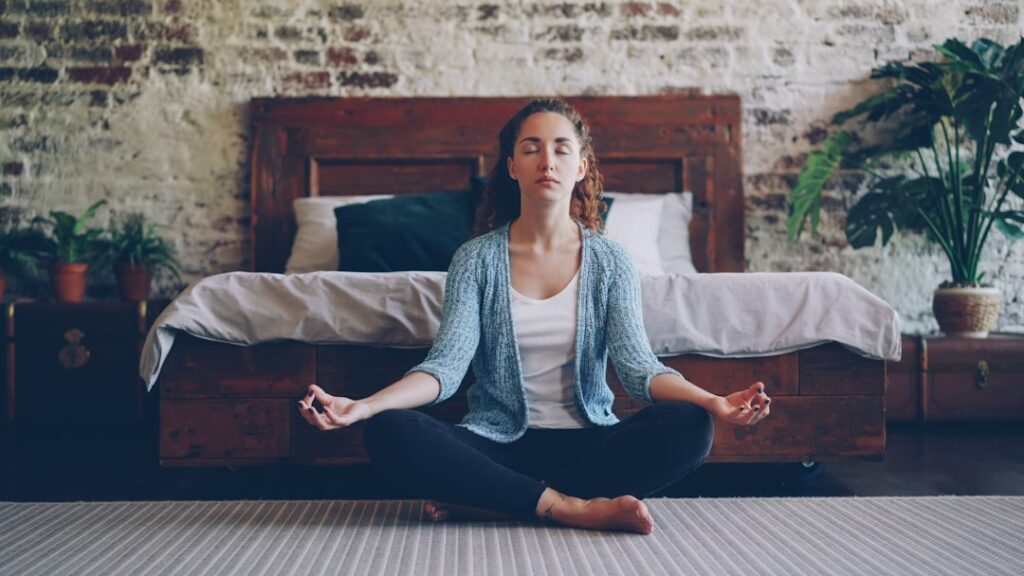
Your breathing is always with you, which makes it one of the simplest anchors for a short relaxation routine. Breathing exercises do not require equipment, a special room or a long session. They can be practiced at home, during a work break or while traveling.
The aim is not to breathe as deeply or as slowly as possible. Comfortable, unforced breathing is more important. If any exercise makes you dizzy or uncomfortable, return to your normal breathing.
7 breathing exercises for relaxation
1. Simple slow breathing
Sit comfortably and let your shoulders relax. Breathe in gently, then breathe out without rushing. Repeat for a few cycles while paying attention to the sensation of the breath rather than trying to achieve a particular result.
2. Longer, comfortable exhale
Take an easy breath in and allow the breath out to feel slightly more unhurried. Do not force a very long exhale or hold your breath. The exercise should remain comfortable from beginning to end.
3. Counted breathing
If counting helps you focus, choose an easy rhythm. For example, count gently during the inhale and again during the exhale. The exact number is less important than keeping the breathing relaxed and avoiding strain.
4. Belly-awareness breathing
Place a hand comfortably over your abdomen and notice how your body moves as you breathe. There is no need to push your stomach outward. Simply use the movement as an anchor for your attention.
5. Box-style breathing
Some people enjoy dividing breathing into equal stages: inhale, pause, exhale and pause. Keep each stage comfortable and brief. Breath-holding is optional; skip it if it feels unpleasant or if you have been advised not to hold your breath.
6. Breathing with a relaxation word
Choose a simple word such as “calm” or “easy.” Think of it quietly as you breathe out. This gives your attention somewhere gentle to return whenever your mind wanders.
7. Five-senses breathing break
Combine several comfortable breaths with awareness of your surroundings. Notice something you can see, hear or feel between breaths. This can be useful when you want a short pause from a busy day without closing your eyes.
When can you practice?
- During a short work break.
- Before beginning your evening wind-down.
- After arriving at a hotel following a busy travel day.
- Before a quiet spa or self-care routine.
- Whenever you want a brief screen-free pause.
Keep the routine simple
You do not need to complete all seven techniques. Try one and see whether you enjoy it. Consistency is easier when the practice is short and fits naturally into your day.
A 3-minute breathing reset
- Sit comfortably and let your shoulders soften.
- Take several easy breaths without trying to make them unusually deep.
- Let the exhale feel slightly more unhurried than the inhale.
- If your mind wanders, return attention to the physical sensation of breathing.
- Finish by noticing one sound, one sight and one physical sensation around you.
This short routine is designed as a calming pause, not a performance target. Stop and return to normal breathing if you feel light-headed or uncomfortable.
Which technique should you try first?
- For a busy mind: counted breathing can give attention a simple task.
- For an evening wind-down: comfortable longer exhales may feel easier to repeat.
- For travel or work: five-senses breathing can be done quietly without closing your eyes.
- If counting feels stressful: use simple slow breathing instead.
Read Next
- How to Relax Before Bed: A Simple Nighttime Routine
- Sleep Hygiene: 10 Simple Habits for Better Sleep
- Start Here: Wellness Guides
A note on comfort
Breathing exercises are general wellness practices, not medical treatment. Stop if you feel dizzy, short of breath or uncomfortable. People with health concerns that affect breathing should follow guidance from their qualified healthcare professional.
Reviewed under the Tranquilla Spa Editorial Standards. This article provides general wellness information and is not medical advice.
Featured photo by Vitaly Gariev on Unsplash.