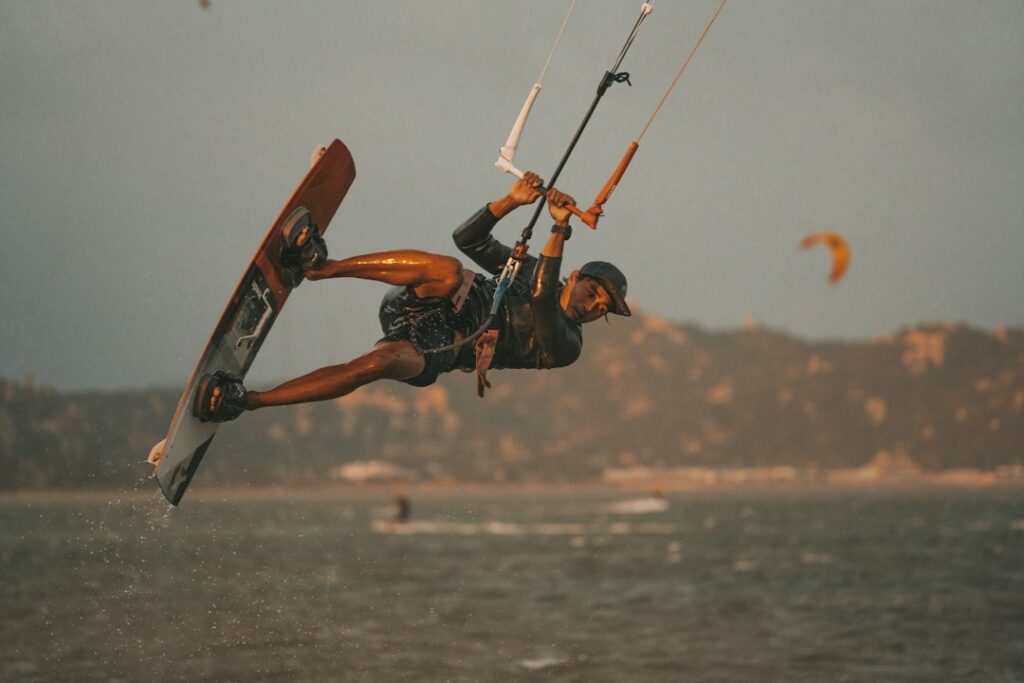
One more tack, one more jump, one more hour in the wind. A good day of kitesurfing in El Gouna can be exhilarating, and it can leave different parts of your body asking for different kinds of attention. Your hands manage the bar, your shoulders and upper back respond to changing pull, your trunk works to keep you stable, and your legs and feet stay active on the board. A recovery routine should be as adaptable as the ride itself.
This guide helps you distinguish ordinary post-activity tiredness from symptoms that deserve a medical assessment, and explains where massage can fit into a pleasant beach day. It is general wellness information, not a diagnosis or a treatment plan.
Why kitesurfing can feel like a whole-body day
Kitesurfing is not one repetitive movement. Water starts, edge control, steering, changing wind and landings all ask for coordinated effort. One rider may notice tired forearms from holding the bar; another may feel more work in the calves, hips or upper back. The right question after a session is not “Which muscle does every kitesurfer need massaged?” It is “Where do I feel the effects of today’s ride, and what feels comfortable now?”
Research on kitesurfing injuries also reminds us to take the sport seriously. A prospective cohort study reported foot and ankle, knee, and hand or wrist among the common sites of injury; other research has tracked problems involving the shoulders, lower back and knees. Injury statistics describe groups of riders. They cannot tell whether your own post-ride sensation is harmless soreness or an injury, and they do not show that massage prevents injuries. Read the prospective kitesurfing study.
A simple check when you come off the water
Give yourself a few minutes to settle before making plans. Rest in the shade, replace fluids according to your thirst and conditions, and notice whether you have general tiredness, a familiar tight feeling or a specific new pain. A gentle walk and an ordinary meal may be all you want. If the ride was demanding, you may also enjoy a calm, tailored massage later in the day.
Do not ask a therapist to “work through” a fresh injury. A fall, a twist with immediate pain, substantial swelling, bruising, numbness, weakness, difficulty bearing weight, or pain that is sharp or getting worse calls for appropriate medical assessment. Recent sunburn, broken skin or unusual heat sensitivity also affects whether a massage is comfortable. Tell the therapist what happened before any session starts.
The difference between a tired area and a problem to investigate
After kiting, some people describe a diffuse, familiar heaviness in muscles that have been active. That can be different from a pinpoint pain that began during a fall or an awkward landing. You do not need to make a medical diagnosis yourself. Notice the timing, location and effect on normal movement, then choose the safer route if you are uncertain. If pain changes your gait, grip or ability to use an arm, seek assessment rather than relying on a massage appointment.
A therapist needs practical information, not a perfect description. “My right forearm has felt worked since holding the bar” and “I landed hard on my left knee” lead to very different choices. In the first case, comfortable, light work may be reasonable if you want it. In the second, the knee should not be treated as ordinary post-exercise tension. If you feel dizzy or unwell after being in the sun, address that first instead of booking straight away.
Choose the type of session by the day you had
Different ride days can call for different preferences. A long, steady session may leave you wanting a relaxed full-body massage and a quiet evening. A technical practice day may draw your attention to the hands and forearms. A day with lots of edging and board work may leave you more aware of your legs and feet. These are examples of how to communicate with a therapist, not a rule about which muscles every kite technique uses.
If you want focused attention, select one or two priority areas. Trying to cover every area with firm pressure in a short visit can make the experience less relaxing. A 45-minute session is enough for a clear focus; 60 minutes gives more room for a calm start and a broader sequence. Neither length is medically required. You can decide according to your time, comfort and budget.
What massage can and cannot promise
Massage is a reasonable way to make time for relaxation and comfortable attention to muscles that feel overworked. In a systematic review of sports massage, researchers found no evidence of a direct boost to strength, sprint or endurance performance. They did find possible modest improvements in flexibility and delayed-onset muscle soreness, although the studies were varied. That is a more useful promise than “you will ride harder tomorrow”: the session can be tailored to how you feel, and your response may differ from someone else’s. See the sports massage review.
More pressure is not automatically better. After a full day in the sun and wind, a slow, comfortable sequence may feel preferable to very firm work. If a particular area feels sore, ask for lighter pressure there or leave it alone. Stop or change the technique whenever something feels wrong. The US National Center for Complementary and Integrative Health notes that serious adverse effects are uncommon but have been reported, especially with vigorous massage or in people with certain risks. Read the NCCIH safety overview.
A practical post-ride routine that does not depend on massage
Think of massage as one optional part of a wider day. First, get out of the sun, dry off and give yourself a moment to notice how you feel. Drink and eat in a way that suits your activity and the weather. A gentle stroll or a little comfortable movement may feel better than sitting still immediately; if you are exhausted, rest. Prioritize a good night’s sleep, especially when you plan to ride again. These simple choices remain useful whether or not you book any treatment.
Do not turn a recovery routine into another competition. There is no special number of stretches, massages or minutes that every rider must complete to “earn” the next session. If you want a massage because it makes your trip more enjoyable, that is a valid reason. If you feel pain that is new, severe or worrying, the right step is a clinical opinion, not a more elaborate wellness routine.
Meet Kite Surf Massage at Makani Beach
We created Kite Surf Massage as a flexible beach session for riders. It combines flowing relaxation strokes, sports-style attention to the areas you select, and gentle comfortable movement when appropriate. Your therapist can focus on shoulders and upper back, forearms and hands, hips, calves or feet. There is no fixed “kiteboarding pressure level”: you choose what feels right.
At Makani Beach, choose 45 minutes for €50 or 60 minutes for €60. A short conversation before the session helps us adapt the time to your ride and your preferences. If you are staying for several days, you can request more than one appointment across the trip. Each session should reflect how you feel on that day; there is no required number of visits and massage is not a substitute for rest or injury care.
Explore Kite Surf Massage and request a time at Makani Beach. Our team will confirm availability before the booking is final.
Three useful questions to ask before booking
- What do I want from this visit? Quiet relaxation, comfortable work around tired muscles, or simply time away from the wind?
- Which areas should the therapist avoid? Mention fresh pain, sunburn, skin irritation, a recent fall and any health condition that affects massage.
- What pressure feels good today? You can request a change at any point.
A memorable kite day does not have to end the moment the kite comes down. A little time to cool off, eat, rest and choose the kind of recovery you enjoy can be part of the holiday itself.
Frequently asked questions
Should I book immediately after leaving the water?
Give yourself time to cool down, change and make sure you feel well. The session can be later that day or on a rest day. Tell the therapist if you have sunburn or a fresh bruise so those areas can be avoided. The best timing is one that fits your comfort and the booking availability, not a promised “optimal recovery window.”
Will a stronger massage help me kite better tomorrow?
That claim is not supported by the sports massage review cited above. A firm massage can even be unpleasant when an area is tender. Choose pressure you enjoy and communicate throughout. Skill, conditions, appropriate rest and safe decisions on the water remain separate from massage.
Can a beginner book Kite Surf Massage?
Yes. You do not need to have ridden for hours or performed jumps. A beginner may simply want a relaxing session after lessons. The therapist asks what you would like and adapts the experience, whether that means gentle full-body work or a little extra attention to hands and shoulders.