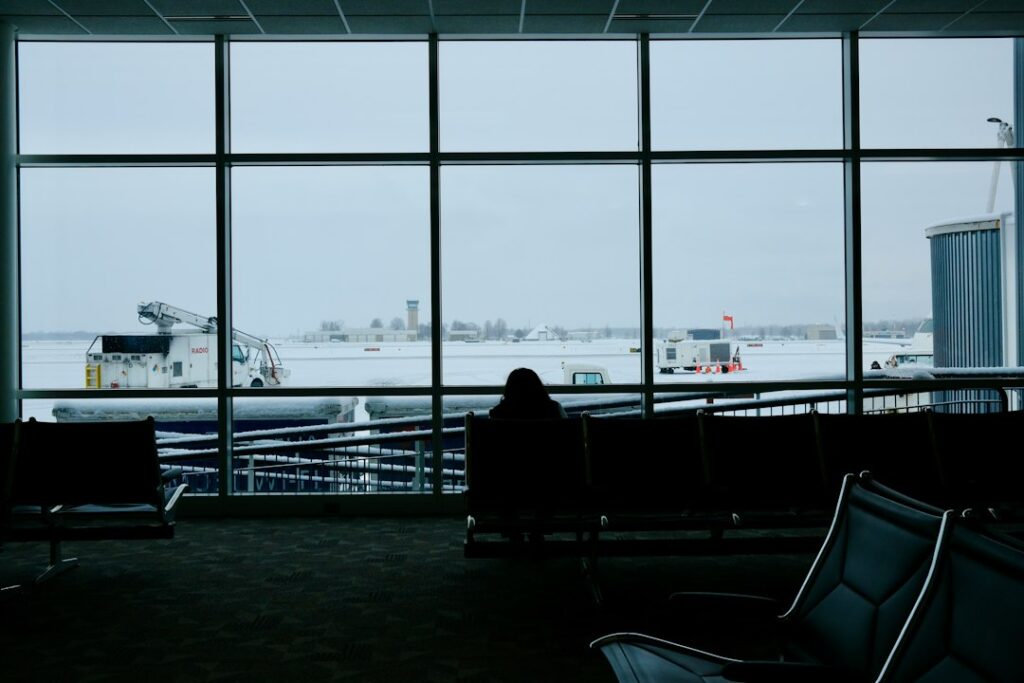
Travel anxiety is easier to manage when you turn the trip into a series of small, predictable steps. Start with the parts you can control: documents, transport, medication, sleep, food and a simple plan for the airport or station. During the trip, use slow breathing, grounding and realistic self-talk instead of trying to eliminate every anxious feeling. If anxiety is severe, causes repeated panic attacks or stops you from travelling, professional treatment can help.
Why travel can trigger anxiety
Travel combines uncertainty, crowds, time pressure, unfamiliar places and reduced control. A delayed flight, long security line or change of plan can feel more threatening when you are already tired or worried. Some people fear flying itself; others worry about illness, bathrooms, getting lost, language barriers, being away from home or having a panic attack in public.
Anxiety can cause a fast heartbeat, sweating, shaking, nausea, dizziness, muscle tension, breathlessness and an urge to escape. Those symptoms are real, but they are not always evidence that danger is present. The U.S. National Institute of Mental Health explains that anxiety disorders can involve persistent fear and physical symptoms that interfere with daily life. A clinician can assess symptoms when you are unsure whether they are anxiety or a medical problem.
Start planning several days before the trip
Create one travel document folder
Keep your passport or ID, tickets, accommodation address, travel insurance details and essential phone numbers in one physical or digital location. Save offline copies in case mobile data fails. Check official entry rules and transport schedules rather than relying on social posts or old screenshots.
Reduce avoidable time pressure
Work backward from the departure time. Include travel to the airport, parking or drop-off, check-in, security and a buffer for queues. Arriving extremely early may prolong anticipatory anxiety, but leaving no margin increases real stress. Choose a reasonable buffer based on the airport and official carrier guidance.
Pack essentials, not every possible emergency item
A short checklist is more useful than repeatedly repacking. Include medication in original labelled packaging, a refillable water bottle for use after security, a snack that works for you, a charger, comfortable layers and any approved mobility or medical items. Our carry-on wellness kit offers a compact starting list.
Rehearse the first steps
Picture only the next few actions: reach the terminal, find the screen, check the gate, pass security and sit near the departure area. A brief rehearsal can make the sequence familiar. Avoid mentally running through every unlikely disaster; that usually creates more uncertainty rather than solving a problem.
Protect sleep without chasing perfect sleep
Keep your usual wake time as consistently as practical for a few days before travel. Avoid adding a late night to “make yourself tired” for the flight. Sleep loss can increase emotional reactivity and make normal travel frustrations harder to tolerate.
Pack an eye mask or earplugs if you use them safely. For overnight travel, plan sleep around arrival time rather than expecting a full night on the plane. See our guide on when to sleep on an overnight flight for a practical timing approach.
Do not experiment with a new sleep aid, sedating antihistamine or alcohol on travel day. Sedation can affect balance, judgment and your ability to respond to instructions. Ask a pharmacist or clinician about medication interactions and the rules for carrying medicines across borders.
Use a simple airport routine
- Check facts: confirm the gate and departure time on the official board or airline app.
- Meet basic needs: use the bathroom, drink normally and eat a familiar snack if needed.
- Choose a calmer location: sit away from the busiest walkway while staying close enough to hear announcements.
- Limit repeated checking: decide how often you will check the board instead of refreshing every minute.
- Focus on the next action: boarding is the current task; the entire trip does not have to be solved at once.
If crowds are the main trigger, ask the airline or airport in advance about accessibility assistance or quieter routes. Policies differ, so verify what is available rather than assuming.
Travel anxiety tips for the journey
Lengthen the exhale
Breathe in gently through the nose, then breathe out a little more slowly. Do not take repeated huge breaths; overbreathing can increase tingling and dizziness. Try five calm cycles and return to normal breathing. Our breathing exercises guide includes several low-pressure options.
Use the 5-4-3-2-1 grounding method
Name five things you can see, four you can feel, three you can hear, two you can smell and one you can taste. The exact count matters less than directing attention to the present environment. Grounding is a coping tool, not a test you can fail.
Release unnecessary muscle tension
Drop your shoulders, unclench your jaw and let your hands rest. Press both feet into the floor for a few seconds, then release. Small movements can interrupt the posture of alarm without drawing attention in a public space.
Use realistic language
Replace “I must calm down now” with “This is uncomfortable, and I can take the next step.” Replace “Something will definitely go wrong” with “Problems are possible, and I have a plan for the common ones.” The goal is accuracy, not forced positivity.
Choose distraction carefully
A familiar podcast, simple game or downloaded show can help during waiting. Keep enough awareness to hear announcements and follow safety instructions. Constantly searching symptoms online often increases anxiety.
What to do during turbulence
Turbulence can feel frightening even when the crew is following normal procedures. Keep your seat belt fastened whenever you are seated, follow crew instructions and place loose items securely. Look at a stable object, relax your grip and use a slow exhale. If flying fear is severe, a structured fear-of-flying programme or cognitive behavioural therapy may be more helpful than collecting reassurance before every flight.
Food, caffeine and alcohol
Eat familiar meals and snacks rather than skipping food all day. Hunger, dehydration and a large amount of caffeine can mimic or amplify anxiety sensations. If you normally drink coffee, an abrupt stop may cause headache or fatigue, so consider a smaller usual amount instead of either extreme.
Alcohol may feel calming at first but can impair sleep, worsen dehydration and interact with medication. It is not a reliable anxiety treatment. Drink fluids normally; forcing excessive water can also be unsafe.
If you have a history of panic attacks
Make a written plan with your clinician or therapist before travel. Record the coping steps that have worked, medication instructions, emergency contacts and when to seek help. Keep prescribed medicine accessible and take it only as directed.
The CDC Yellow Book guidance on mental health in travellers recommends considering a traveller’s mental health history, treatment needs and continuity of care. For international trips, check how to obtain help at the destination and whether your insurance covers mental healthcare.
When anxiety may need professional help
Speak with a qualified clinician if anxiety regularly makes you cancel trips, causes repeated panic attacks, leads to heavy alcohol or sedative use, or interferes with work and relationships. Evidence-based treatments such as cognitive behavioural therapy and exposure-based approaches can help many people, but treatment should be individualized.
Seek urgent medical care for new chest pain, fainting, severe breathing difficulty, weakness on one side, confusion or symptoms that are different from your usual anxiety. Do not assume a new medical symptom is “just panic.” If you are in immediate danger or thinking about harming yourself, contact local emergency services or a crisis service where you are.
A one-page travel anxiety checklist
- Confirm documents, entry rules, tickets and accommodation.
- Save important information offline.
- Pack prescribed medication and familiar essentials.
- Plan a realistic departure buffer.
- Eat normally and moderate caffeine and alcohol.
- Download one calming activity.
- Write three coping statements.
- Choose one breathing or grounding exercise.
- Identify who to contact if plans change.
- Plan gentle recovery after arrival; our long-flight recovery guide can help.
Bottom line
You do not need to feel completely calm to travel. Reduce preventable uncertainty, protect sleep, focus on the next action and practise one or two coping skills before departure. If travel anxiety is persistent or disabling, professional support is a practical next step—not a sign that you have failed.