To clean a rubber yoga mat, start with the care instructions for its exact model. Use the approved cleaner or a lightly damp cloth, remove surface dirt gently, and let the mat dry completely before rolling it up. Do not assume that soap, vinegar, alcohol, essential oils or a bathtub soak is suitable simply because someone uses it on a different mat.
This guide helps you build a practical cleaning routine, choose between a quick wipe and a more thorough clean, and avoid confusing a fresh smell with disinfection. It covers mat care rather than yoga technique; for your next session, see our morning stretch routine.
First, identify the mat you actually own
Check the receipt, label or product page for the brand and model. “Yoga mat” describes its purpose, not one uniform material. Even a mat sold as rubber may have a separate surface layer, printed finish or fabric construction. Instructions for a plain rubber product therefore may not apply to every part of another mat.
Write down three details before choosing a cleaner: what the maker permits, what it excludes, and how it says to dry the mat. If an old product page has disappeared, contact the manufacturer with a photograph of the label. Guessing from the colour or texture is less reliable than confirming the model.
For an unidentified second-hand mat, avoid experimenting with several household chemicals. Ask the seller for the model first. If you cannot establish a safe cleaning method and the surface is already deteriorating, replacement may be more practical than trying increasingly aggressive treatments.
What rubber-mat manufacturers recommend
JadeYoga: damp wiping and a compatible wash
JadeYoga’s care FAQ recommends a damp cloth for routine cleaning, with more frequent attention for vigorous practice or hot yoga. It advises against other cleaners that can harm its natural rubber, including products containing alcohol, petroleum solvents, soaps or concentrated essential oils. Its own wash is a specific exception, not evidence that all oil-based sprays are suitable.
Manduka: match the instructions to the series
Manduka’s mat-care guide distinguishes between its different mat families. For its natural-rubber eKO range, it describes using a dedicated rubber-care product without soaking or submerging the mat, then wiping it dry before storage or use. Check the current instructions for your exact model and cleaner rather than transferring directions from a different series.
These examples explain why there is no universal homemade recipe in this guide. A manufacturer may permit one formulated product while excluding ingredients or methods that appear in general cleaning advice.
A simple cleaning routine, step by step
- Choose your drying space first. Make room where the mat can remain open without blocking a walkway. Planning this before cleaning avoids having to roll it up while damp.
- Inspect both sides. Look for loose grit, visible dirt, worn patches and peeling edges. Note whether the dirt is on the exercise surface or the underside that touches the floor.
- Gather a clean, soft cloth. Keep a separate cloth for mat care so you are not accidentally applying residue left from kitchen or bathroom cleaning.
- Follow the approved method. Use the amount and application instructions on the compatible product label. If the maker specifies damp wiping, the cloth should not be dripping.
- Work in manageable sections. Move across the mat systematically rather than repeatedly soaking one mark. Avoid abrasive scrubbing unless the care instructions expressly allow it.
- Check before putting it away. Follow the stated drying directions and confirm that both sides are dry. Do not use a fixed countdown as a substitute for checking.
Keep this routine short enough that you will actually do it. A cloth stored beside your equipment and a clear place to unroll the mat can be more useful than buying several different cleaning products.
How often should you clean it?
Use the manufacturer’s guidance as your starting point, then consider how you practise. A short session at home, a sweaty class and a mat carried between several studios do not create the same cleaning needs. Inspect it after practice instead of waiting for a strong smell.
A useful personal reminder is to check the mat when you put away your towel. If it needs cleaning, leave enough time for drying before packing. For occasional use, add a regular inspection to your exercise routine so the mat does not sit forgotten in its bag between sessions.
If you are returning to exercise after a break, equipment care can be one small preparation step. Our guide to daily stretching discusses building a manageable practice without treating a single session as a cure for stiffness.
Cleaning and disinfecting are different jobs
The CDC distinguishes cleaning from disinfecting: cleaning removes dirt and many germs, while disinfecting uses suitable chemicals to kill remaining germs. A pleasant scent or a label saying “natural” does not establish that a product disinfects.
When disinfection is needed, both the mat and the disinfectant instructions must support that use. The specified wet contact time matters. A product intended for hard, nonporous surfaces is not automatically suitable for every exercise mat. Do not mix cleaning chemicals.
For a shared studio mat, ask staff about their cleaning procedure and whether the mat is ready to use. If you cannot obtain a clear answer, using your own clean equipment is a practical option. Do not improvise a stronger chemical treatment on someone else’s property.
Common questions about household cleaners
Can I use dish soap or vinegar?
Only if the maker of your model allows it and provides appropriate directions. “Mild” and “natural” are not material-compatibility tests. If instructions name water or a particular cleaner, follow those directions rather than replacing them with an online mixture.
What about essential oils?
Do not add them for fragrance without checking compatibility. JadeYoga specifically warns that oils may leave its mats slippery. A commercial formulation approved for a particular mat does not tell you what concentration would be safe in a homemade spray.
Can I wash it in the machine?
Do not machine-wash an unidentified rubber mat. Look for explicit permission on its own care label. A washable yoga towel or rug is a separate item with separate instructions, even if it is used on top of the mat.
Drying, storage and travel
Leave yourself a realistic gap between cleaning and the next class. Drying time can vary, so avoid promising yourself that a mat will be ready in a particular number of minutes. If it is still damp, use another suitable surface or postpone the floor portion of your session.
JadeYoga advises ventilation and keeping its rubber mats away from direct sunlight when airing them. Follow your own model’s storage guidance, and avoid treating a hot car or radiator as a shortcut.
When travelling, plan where the mat will dry before you clean it. A hotel bathroom with little space may make a last-minute wash awkward. Pack only a compatible product in an appropriate container, and keep its instructions available. Our airplane travel checklist can help organise the rest of your bag.
When cleaning is not solving the problem
If the mat remains unusually slippery after correct cleaning and complete drying, stop using it for poses that depend on grip. Check for cleaner residue, surface damage or model-specific break-in instructions before trying again. Do not assume that adding more cleaner will restore traction.
Persistent odour, unexplained staining or visible deterioration deserves a question to the manufacturer, particularly if the mat stayed wet in storage. Describe what you used and how you dried it. Photographs of the affected area can make the advice more specific.
Replace a mat that no longer provides a dependable surface for your practice. Cleaning is maintenance; it cannot guarantee that worn material will regain its original condition.
Your next-session checklist
- Correct model and care instructions identified.
- Compatible cleaning method used.
- Both sides dry before storage.
- No unexpected slippery residue or damaged areas.
- A clean cloth and drying space ready for next time.
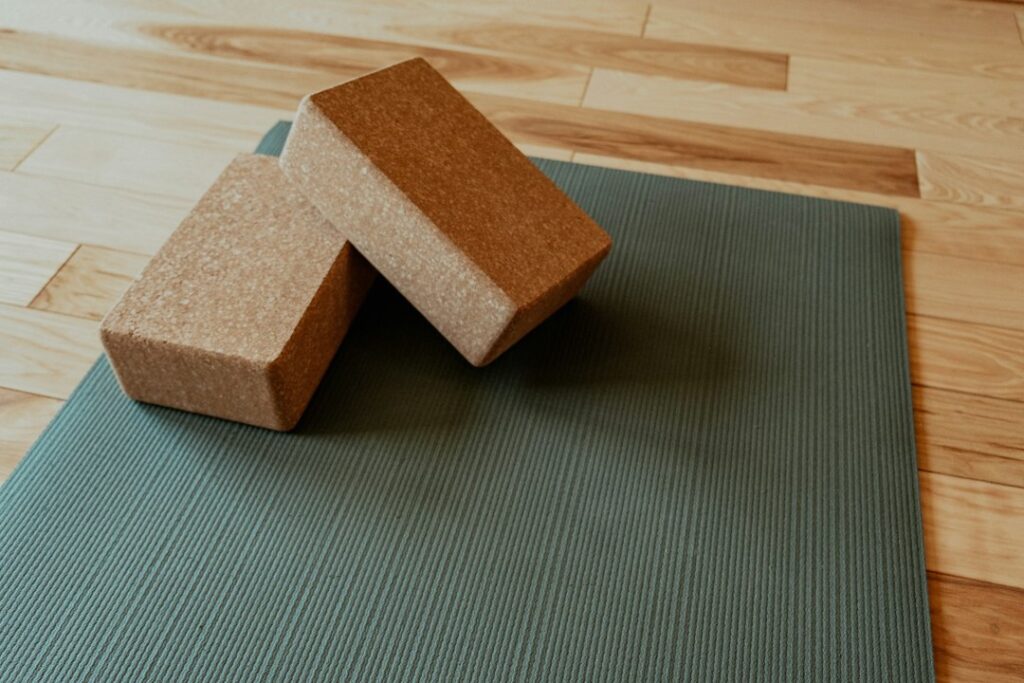
Illustrative photo: yoga mat and blocks; material not identified. Photo by Samantha Sheppard on Unsplash.