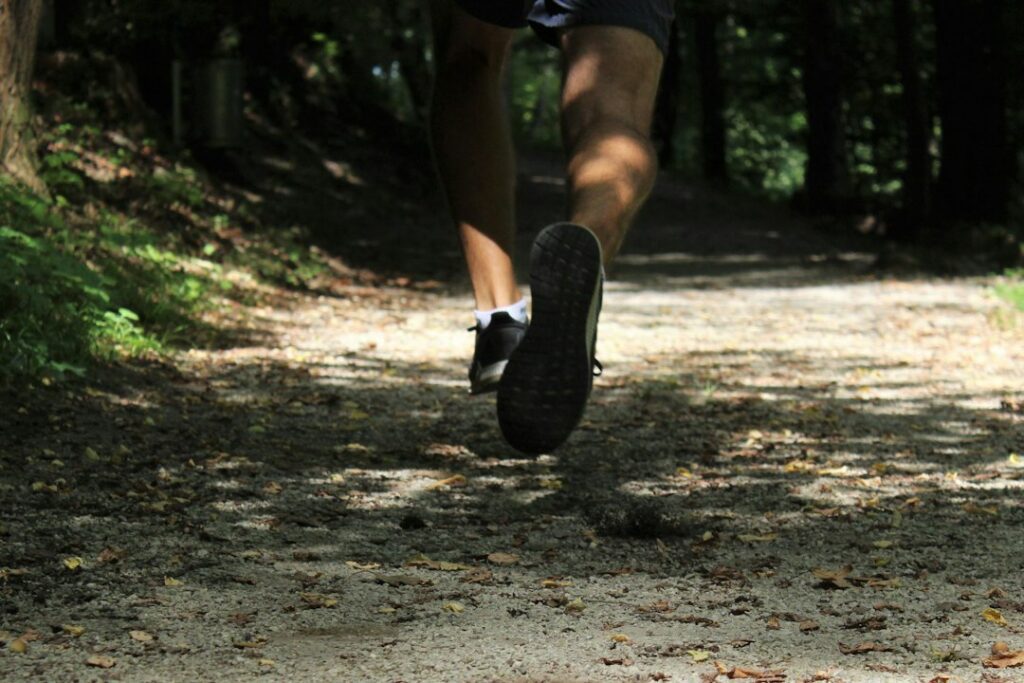
Walking works the calves, quadriceps, hamstrings, glutes and smaller stabilizing muscles, but it is mainly an endurance activity. Beginners may notice stronger legs after starting a walking routine, while experienced walkers usually need more resistance to build substantial muscle mass.
When walking challenges the muscles more
Hills, stairs, faster walking and longer routes increase muscular demand. Walking uphill especially asks more from the glutes and calves. See our guide to walking uphill benefits.
Why muscle growth eventually plateaus
Muscle adapts to repeated work. Once your usual walk becomes easy, the stimulus may be too small for continued muscle growth. Progressive resistance training with weights, bands or bodyweight exercises can provide a stronger overload.
Walking plus strength training
The two work well together. Walking supports aerobic fitness and daily activity, while strength training targets muscle and bone more directly. If you are new to resistance work, our beginner strength guide is a practical starting point.
What if your legs feel sore?
Mild soreness after a new route or hill session can be normal. Sharp pain, persistent swelling or pain that changes your gait is not something to push through. Reduce load and seek evaluation if symptoms are severe or do not improve.
Walking can strengthen the legs, especially at first, but it is not a complete substitute for progressive strength training if muscle growth is the main goal.