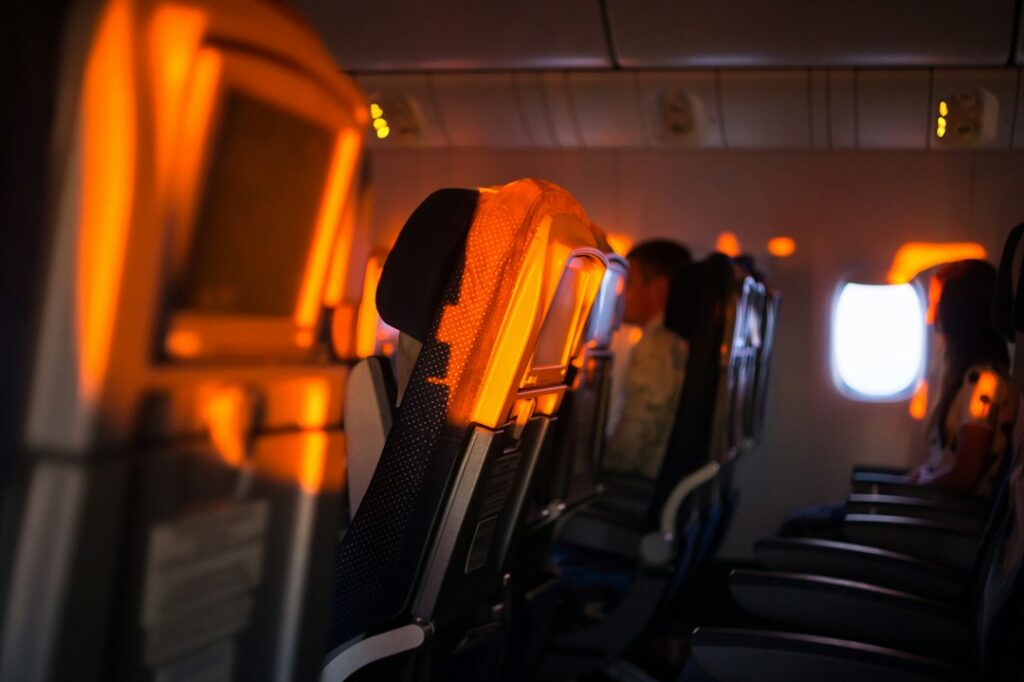
A useful carry-on wellness kit should cover five things: sleep, hydration, simple food, hygiene and comfort. You do not need dozens of gadgets; a small set of items you will actually use is usually more practical.
Carry-on wellness checklist
- Eye mask and earplugs or noise-canceling headphones.
- Empty reusable water bottle to fill after security.
- Simple travel-friendly snacks.
- Lip balm and a small moisturizer.
- Tissues, hand sanitizer and a toothbrush.
- Comfortable clothing and supportive shoes.
- Essential medication and any needed documentation.
Sleep essentials
An eye mask, earplugs or noise-canceling headphones and a light layer can make the cabin easier to sleep in. A small neck pillow may help some travelers, although comfort is personal.
Hydration and food
Bring an empty reusable water bottle if airport rules allow, then fill it after security. Pack simple snacks that travel well, such as nuts, whole-grain crackers or a protein-rich option that fits your diet. See best snacks for long flights.
Skin and hygiene
Lip balm, a small fragrance-free moisturizer, tissues, hand sanitizer and a toothbrush can make a long journey feel much better. Keep liquids within airport security limits.
Movement and circulation
Keep the space around your feet clear so you can move your ankles and legs. During a long journey, move your legs regularly and walk when it is safe and the seat-belt sign is off. If you have a history of blood clots, recent surgery or another risk factor, ask a clinician before travel whether you need additional precautions, including properly fitted compression stockings. A packing kit does not replace an individual prevention plan. See the CDC guidance on travel-related blood clots.
Medication and documents
Keep essential medication in your carry-on, in its original labeled container, and bring copies of prescriptions. Check the rules for your destination and any countries where you have a layover: a medicine permitted at home may be restricted elsewhere. Ask your pharmacist or prescriber about storage and dose timing across time zones before departure. See the CDC guidance on traveling abroad with medicine.
Keep it realistic
Choose items you will actually use. Our broader airplane travel essentials guide covers the rest of your packing list, while how to sleep on a plane focuses on rest.
Frequently asked questions
What should I avoid overpacking for a long flight?
Avoid bulky gadgets you are unlikely to use. Prioritize small items that solve a clear comfort, sleep, hydration or hygiene need.
Should medication stay in a carry-on?
Essential medication is usually best kept with you rather than in checked luggage. Check destination rules and bring supporting documentation when needed.
Do I need compression socks?
Not everyone needs them. They may be useful for some travelers, particularly people with additional blood-clot risk factors. See our compression socks guide.
How to organize the kit so you actually use it
Keep the items you are most likely to need during the flight in one small pouch rather than spreading them across several bags. Put medication, lip balm, tissues, hand sanitizer, an eye mask and charging cables where they can be reached without unpacking the overhead compartment. Anything you may need during takeoff or while the seat-belt sign is on should be accessible from your personal item.
Separate liquids into a clear security-compliant bag before you arrive at the airport. This saves time at screening and reduces the chance that useful items are buried at the bottom of your luggage. Keep important documents and medication away from liquids to reduce the risk of damage from leaks.
A practical kit by flight length
Short flights
For a flight of a few hours, the basics may be enough: water after security, one snack, essential medication, tissues and a charging cable. You probably do not need a large sleep setup unless the flight overlaps with your normal sleep time.
Long-haul daytime flights
Add a moisturizer, lip balm, toothbrush, an extra layer and a few simple food options. Build in regular movement whenever it is safe to do so. If you are crossing several time zones, keeping your carry-on organized also makes it easier to start adjusting meals and sleep to the destination schedule.
Overnight flights
An eye mask, earplugs or noise-canceling headphones, a comfortable layer and a simple neck support may become more useful. Avoid making the kit so complicated that setting it up keeps you awake. A dark, quiet and comfortable environment usually matters more than having many accessories.
Items that often sound useful but may not be necessary
Travel catalogs can make a long flight seem as though it requires specialized equipment. In practice, many travelers can skip bulky foot hammocks, large pillows, multiple skincare products, strong fragrances and gadgets that need extra setup. Space in a personal item is limited, so every item should earn its place.
Strongly scented sprays can also bother nearby passengers. If you use skincare products, simple fragrance-free options are usually easier to manage in a shared cabin.
Before you leave home
- Charge your phone, headphones and power bank.
- Download boarding passes, hotel details and any important documents for offline access.
- Check airline and airport liquid rules.
- Confirm that medication is allowed at the destination and during transit.
- Pack one change of essential clothing if a delayed checked bag would create a problem.
- Check that your reusable bottle is empty before security.
- Place the wellness pouch in your personal item rather than your checked bag.
After landing
Your carry-on kit can still be useful after the flight. Refill your water bottle, brush your teeth, change into clean clothing if needed and spend a few minutes walking before a long transfer. If you arrive late at night, keeping your essentials together makes it easier to move through the airport and hotel without unpacking your main luggage.
If jet lag is your main concern, combine smart packing with light exposure, meal timing and a realistic sleep plan. Our jet lag recovery guide explains those strategies in more detail.
Bottom line
The best carry-on wellness kit is small, easy to reach and built around your actual needs. Prioritize medication, hydration, sleep comfort, hygiene and a little food rather than filling your bag with travel gadgets. A well-organized kit will not eliminate the physical demands of a long flight, but it can make the journey noticeably easier and help you arrive with fewer avoidable discomforts.