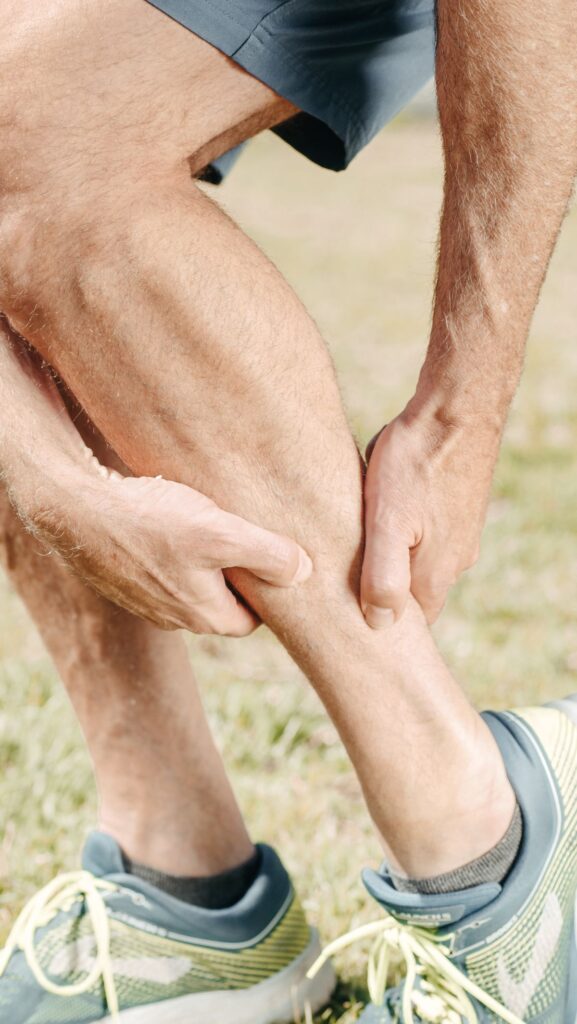
Quick answer: A massage gun uses rapid percussion to apply repeated pressure to soft tissue. For general muscle comfort, start on a low setting, keep the device moving, and avoid bones, joints, the front and side of the neck, open wounds, acutely swollen areas, and places with reduced sensation.
Massage guns can feel useful before or after exercise, but they do not break up toxins, replace rehabilitation, or guarantee faster injury healing. The goal is short-term comfort and a tolerable sensation, not maximum pressure.
What a massage gun actually does
Percussive devices repeatedly compress soft tissue. That can temporarily change how a muscle feels and may make movement feel easier for some people. The effect is mechanical and sensory; there is no good reason to describe it as “detoxing” muscle.
How to start safely
Begin with the lowest comfortable setting. Use the device over a large muscle area such as the calf, quadriceps, hamstrings, or upper back muscles rather than directly over bone. Keep it moving instead of pinning one painful spot for a long time.
Where not to use a massage gun
- Directly over bones or joints.
- The front or side of the neck.
- Open wounds, infected skin, or fresh bruises.
- Areas of acute swelling or suspected injury.
- Areas with numbness or reduced sensation.
- Known varicose veins or areas where a clot is suspected.
Before exercise
A brief, light session may help a muscle feel warm and ready to move. It should not replace a progressive warm-up. If you need intense percussion just to tolerate basic movement, that is a reason to reconsider the activity rather than push through.
After exercise
Some people use a massage gun for temporary soreness or a feeling of stiffness. Use comfortable pressure and stop if symptoms become sharper, spread, or are accompanied by weakness or numbness.
Who should ask a clinician first?
Be more cautious if you take anticoagulants, have a bleeding disorder, neuropathy, significant vascular disease, severe osteoporosis, a recent fracture or surgery, or another condition that changes tissue or circulation risk. Pregnancy and cancer treatment may also require individualized guidance.
How long should you use it?
There is no universally required duration. Short passes over a muscle are usually more sensible than holding the device aggressively in one place. Comfort matters more than chasing a timer.
Warning signs
Stop if you develop sharp pain, numbness, unusual weakness, significant bruising, worsening swelling, or pain that persists after use. A massage gun is not a diagnostic tool.
Related Tranquilla guides
- Massage Before or After Exercise
- Massage vs Stretching
- Muscle Soreness After Exercise
- Massage Benefits and Limits
Source
This article is general wellness information. Do not use a massage gun to self-treat a suspected fracture, blood clot, serious injury, or unexplained severe pain.