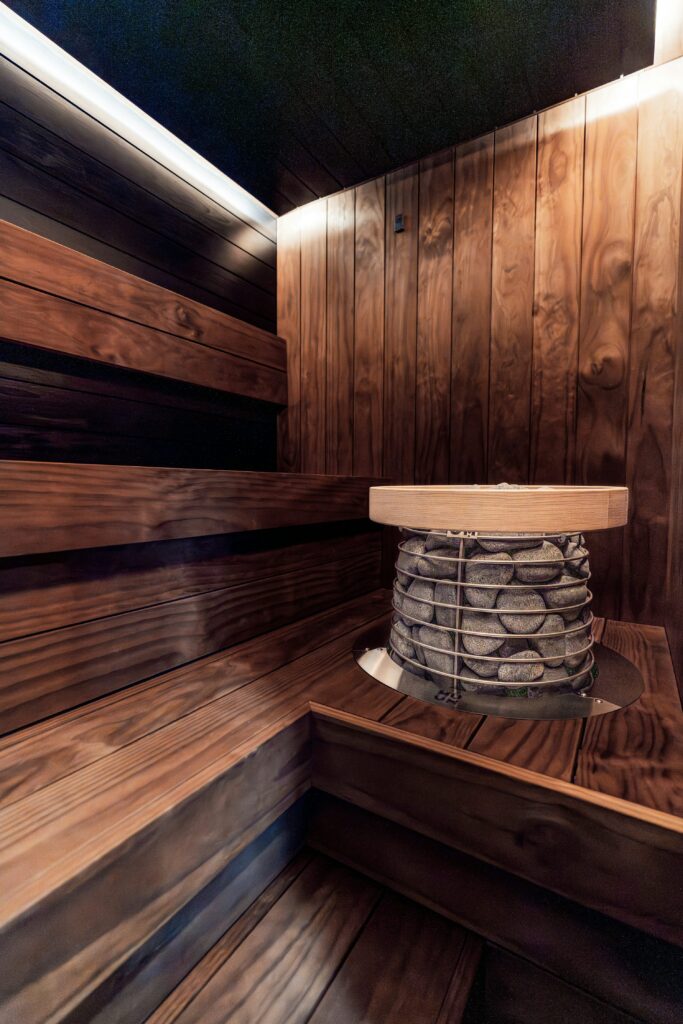
A sauna after a workout can feel relaxing and may help you unwind, but it is not a required part of recovery and it should not replace hydration, food, sleep or sensible training. The biggest practical issue is heat stress: exercise already raises body temperature and fluid loss, and a sauna adds more heat immediately afterward.
For healthy adults who tolerate heat well, a short post-workout sauna can be reasonable once heart rate and breathing begin to settle. The safest approach is to rehydrate, cool down briefly, keep the session moderate and leave immediately if you feel dizzy, weak or unwell.
What happens when you use a sauna after exercise?
During exercise, blood flow to working muscles increases and body temperature rises. In a sauna, the body responds to heat by increasing skin blood flow and sweating. Heart rate can rise even though you are no longer exercising.
This means the sauna is an additional physiological stressor. That can feel pleasant and relaxing, but it is not the same thing as passive rest.
Potential benefit: relaxation
Many people value sauna use because the quiet heat helps them slow down after training. Relaxation can be useful in a recovery routine, especially if it helps you transition out of a high-stimulation workout and into a calmer evening.
That benefit is subjective but still meaningful. You do not need to prove that every wellness habit increases muscle growth for it to have value.
Potential benefit: temporary reduction in stiffness
Heat can make muscles and joints feel looser for a period of time. That may improve comfort after training, but it does not mean the sauna has repaired muscle damage or eliminated delayed-onset muscle soreness.
For more realistic recovery priorities, see our muscle soreness recovery guide.
Does sauna improve muscle recovery?
The evidence is still developing. Some research suggests heat exposure may influence circulation, heat-shock proteins and cardiovascular adaptation, but that does not mean a post-workout sauna dramatically speeds recovery for every person or every type of training.
Sleep, nutrition, appropriate training load and enough recovery time have stronger practical importance.
Can sauna improve cardiovascular fitness?
Regular sauna use has been associated with cardiovascular benefits in observational research, particularly in populations where sauna bathing is common. However, association does not prove that sauna alone causes those outcomes.
Exercise itself remains the foundation of cardiovascular fitness. Sauna can be considered an optional addition rather than a substitute for aerobic activity.
How long should you wait after a workout?
You do not need a long waiting period, but it is sensible to let heart rate and breathing come down first. Spend several minutes cooling down, drink some fluid and make sure you feel steady before entering a hot room.
If you finished an intense interval session, long run or workout in hot weather, waiting longer and rehydrating first is especially important.
How long should you stay in a sauna?
For many healthy adults, a moderate session of around 10 to 20 minutes is a practical range. Beginners should start shorter. Cleveland Clinic advises keeping sessions relatively brief and leaving if symptoms such as dizziness, weakness, breathing difficulty or discomfort develop.
Our sauna duration guide covers beginner timing in more detail.
Hydration matters more after training
Exercise and sauna both increase sweating. If you have already lost a significant amount of fluid during training, adding a long sauna session can increase the chance of headache, dizziness or dehydration.
Drink according to thirst and the intensity of the workout. If you exercised for a long time, trained in heat or sweated heavily, replacing sodium and other electrolytes through food or an appropriate drink may be useful.
Do you need electrolytes?
Not after every workout. For a short, moderate session in a cool environment, water and a normal meal may be enough. Electrolyte replacement becomes more relevant when sweat loss is substantial or prolonged.
We will cover this in our guide to electrolytes vs water.
Sauna after strength training
A short sauna after lifting is generally tolerated by many healthy people. It may help you relax, but it is not a replacement for protein, carbohydrates, fluids and sleep. If your workout was very intense and you feel lightheaded when you stand, cool down and rehydrate before adding more heat.
Sauna after running or cardio
Cardio can produce greater fluid loss and higher body temperature, particularly in warm conditions. After a hard run, cycle or long endurance session, pay closer attention to cooling and hydration before entering a sauna.
If your clothes are soaked, you have a headache or you stopped exercising because of heat symptoms, skip the sauna.
Sauna after a workout in hot weather
Be cautious. When the workout itself occurred in high heat or humidity, the body may already be struggling to dissipate heat. Adding immediate sauna exposure can push total heat stress higher. Cool down fully first, and if you feel unwell, do not use the sauna that day.
Can sauna help with weight loss?
The scale may drop temporarily after a sauna because you lose water through sweat. That is not body-fat loss. The weight returns as you rehydrate. Using prolonged sauna sessions to chase a lower scale number increases dehydration risk and is not a sustainable weight-management strategy.
Should you stretch in the sauna?
Heat can make tissues feel more flexible, but aggressive stretching in a very hot room is unnecessary. If you want to stretch, use gentle ranges and avoid pushing into pain. A normal mobility routine in a cooler environment is easier to control.
Sauna before or after exercise?
Most people prefer sauna after exercise because prolonged heat before training can contribute to fatigue and dehydration. A very short warm-up exposure may feel pleasant, but a hard sauna session before lifting, running or sport can reduce comfort and performance.
Cold shower after sauna?
A cool shower can feel refreshing, but there is no requirement to move directly from extreme heat to extreme cold. If you enjoy cooling gradually, that is fine. People with cardiovascular conditions should avoid dramatic temperature changes unless a healthcare professional has told them it is appropriate.
Alcohol and sauna do not mix well
Alcohol can increase dehydration and impair judgment. Cleveland Clinic specifically advises avoiding sauna use after drinking alcohol. If you have had several drinks, skip the sauna.
Who should ask a clinician first?
People with certain heart conditions, uncontrolled high or low blood pressure, a recent heart attack or stroke, pregnancy, neurologic conditions that affect heat tolerance, or medications that alter blood pressure or sweating should ask a healthcare professional before using a sauna.
When should you stop immediately?
Leave the sauna if you feel dizzy, faint, unusually weak, confused, nauseated, short of breath, develop chest pain or simply feel that the heat is becoming difficult to tolerate. Sit or lie down somewhere cool and seek medical help for severe or persistent symptoms.
A practical post-workout sauna routine
- Finish the workout with a few easy minutes.
- Let breathing and heart rate settle.
- Drink some water.
- Shower if required by the facility.
- Start with 5 to 10 minutes if you are new.
- Leave sooner if you feel unwell.
- Cool down gradually.
- Continue normal hydration and eat your recovery meal.
How often can you use a sauna after training?
There is no universal weekly requirement. Some people enjoy several sessions a week; others use a sauna occasionally. Frequency should depend on tolerance, overall training load, hydration and medical history.
If sauna begins to leave you exhausted, interfere with workouts or create repeated headaches, reduce duration or frequency.
Frequently asked questions
Is sauna good immediately after a workout?
It can be fine for healthy people once they have cooled down briefly and feel well hydrated, but it is not mandatory for recovery.
Does sauna reduce muscle soreness?
Heat may make soreness feel better temporarily, but it does not eliminate the underlying recovery process.
Should I drink electrolytes before sauna?
Not always. They may be useful after heavy sweat loss, but water and normal food are enough for many moderate workouts.
Can I sauna every day after training?
Some healthy adults tolerate frequent sauna use, but more is not automatically better. Monitor hydration, fatigue and how you feel.
Bottom line
A sauna after a workout can be a pleasant recovery ritual, mainly for relaxation and temporary comfort. Keep it short, cool down first, replace fluids and do not use heat to compensate for poor sleep, nutrition or training decisions. Skip the sauna if you are dehydrated, overheated, unwell or have a medical reason to avoid it. If you have cardiovascular or other relevant health conditions, get individualized advice before making post-workout sauna use routine.