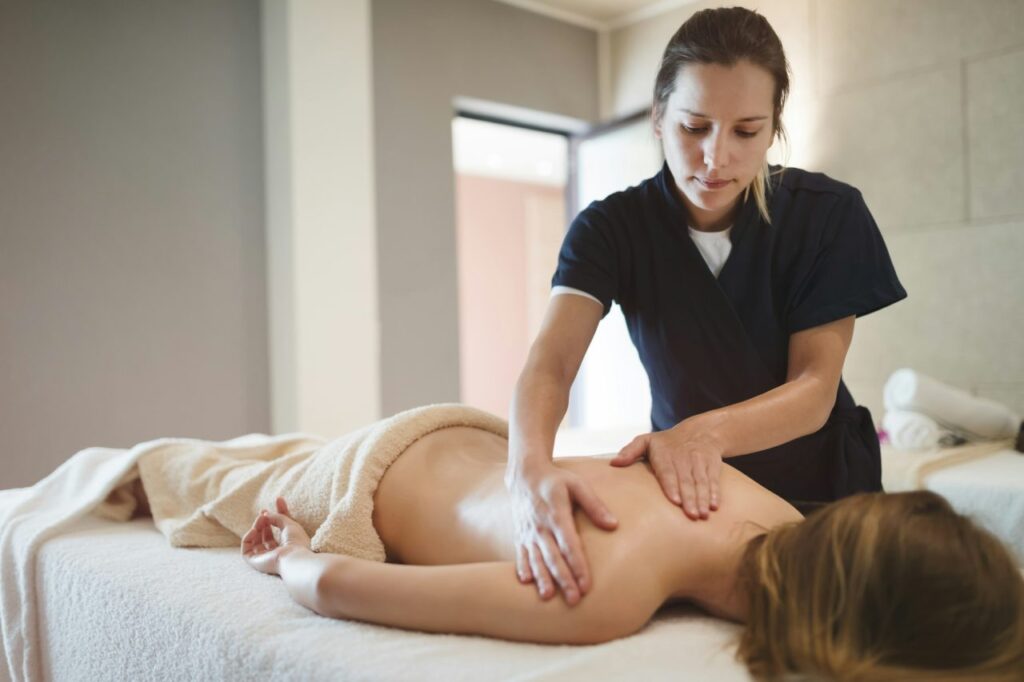
After a long flight, a massage can sound perfect. Your neck feels tight from sleeping upright, your lower back is stiff, your shoulders are tense from luggage, and your legs feel heavy after hours in a seat. For uncomplicated travel-related muscle tension, massage can be a relaxing part of recovery.
There is one important safety point: not every swollen or painful leg after a flight should be massaged. Long-distance travel can increase the risk of deep vein thrombosis (DVT) in some people. A painful, warm, swollen leg—especially when symptoms are mainly on one side—needs medical assessment first. This guide explains when post-flight massage makes sense and when to wait.
Why your body feels stiff after flying
Long flights combine several stressors: prolonged sitting, limited leg movement, awkward sleeping positions, dry cabin air, heavy luggage, time-zone changes, and often poor-quality sleep. The muscles are not necessarily injured; they may simply be fatigued and sensitive after hours without normal movement.
Walking, hydration, daylight, food, and sleep timing are the foundations of recovery. Massage can be added for comfort and relaxation.
What are the possible benefits of massage after a flight?
Massage may help reduce the sensation of muscle tightness, promote relaxation, and make movement feel easier. Many travelers enjoy massage for the neck, shoulders, back, feet, and legs after a long journey.
Massage should not be marketed as “removing toxins” or curing jet lag. Its realistic role is relaxation, temporary symptom relief, and a pleasant transition into the trip.
How soon after landing can you get a massage?
If you feel well, have no concerning leg symptoms, and have had time to walk and rehydrate, a gentle massage later the same day is usually reasonable for many healthy adults. Some travelers prefer to wait until after checking in, eating, showering, and taking a short walk.
There is no universal rule that you must wait 24 hours. What matters more is how you feel and whether there are medical reasons to avoid massage.
Should you walk before the massage?
Yes, a short walk after landing is sensible. It helps restore normal movement after prolonged sitting and gives you a chance to notice whether one leg feels unusually painful or swollen. If walking feels normal and stiffness is muscular, massage can then be considered.
What type of massage is best after travel?
For most travelers, a relaxing Swedish-style massage or moderate-pressure full-body massage is a good starting point. The goal is not to endure the deepest pressure possible. After poor sleep and long sitting, the body may already feel sensitive.
Tell the therapist that you have just completed a long flight. Mention any injuries, surgeries, blood-clot history, medications, pregnancy, or medical conditions that affect circulation.
Is deep tissue massage a good idea immediately after flying?
Deep tissue techniques can be useful for some chronic muscular complaints, but immediately after travel many people benefit more from moderate, comfortable pressure. A painful session is not necessarily more effective.
If an area is swollen, bruised, acutely injured, or unusually tender, deep pressure should be avoided until the cause is clear.
Can massage help jet lag?
Massage cannot reset your circadian rhythm directly. Jet lag improves as your internal clock adjusts to the new time zone. Light exposure, local sleep timing, meals, and activity are more important for that process.
Massage may help indirectly by reducing stress and making it easier to relax at an appropriate local time. That can be valuable, but it should not be described as a cure for jet lag.
Can massage reduce swelling after a flight?
Gentle massage may feel comfortable for mild, symmetrical ankle puffiness when there are no warning signs. But the safest first steps are walking, normal hydration, and elevation.
Do not massage one-sided swelling, a painful calf, warmth, redness, or unexplained tenderness. Those symptoms can be consistent with DVT and require medical assessment.
Blood-clot warning signs every traveler should know
Seek urgent medical attention for:
- swelling mainly in one leg
- calf or thigh pain or tenderness
- warmth or redness in one leg
- sudden shortness of breath
- chest pain, especially with breathing
- coughing blood
- fainting or a rapid unexplained heartbeat
Chest symptoms after a long flight can indicate a pulmonary embolism and require emergency care.
Who should be extra cautious?
People with a previous DVT or pulmonary embolism, recent major surgery, active cancer, known clotting disorders, significant mobility limitations, pregnancy or recent childbirth, or certain cardiovascular conditions should get individualized advice about long-distance travel and massage.
If you take anticoagulant medication, tell the therapist because you may bruise more easily and deep pressure may not be appropriate.
What should you do before the session?
- Walk for at least a few minutes after landing.
- Drink fluids normally.
- Eat something light if you have not eaten for hours.
- Shower and change into comfortable clothing.
- Tell the therapist about your flight and health history.
- Point out any area that feels injured rather than simply tight.
What should you tell your massage therapist?
Be specific. “I flew for 11 hours and my neck and shoulders feel stiff” is more useful than simply asking for a strong massage. Mention headaches, recent injuries, surgery, varicose veins, swelling, pregnancy, medications, and how much pressure you normally prefer.
A professional therapist should be willing to adjust pressure and avoid areas that are not appropriate to treat.
What should massage feel like?
Pressure can be firm without being painful. You should be able to breathe normally and relax. Sharp, burning, electrical, or numb sensations are reasons to speak up immediately. You are always allowed to ask for less pressure or to stop work on an area.
What should you do after the massage?
There is no special detox routine required. Drink according to thirst, eat normally, walk gently, and align your sleep with local time. If the massage made you very relaxed, avoid immediately scheduling an intense workout or demanding activity.
Can you get a massage before a flight instead?
Yes. A massage before travel can be relaxing, particularly if you carry stress in the shoulders and back. Leave enough time so you are not rushing from the treatment room to airport security. People with medical conditions should follow the same safety considerations.
What about foot massage after sightseeing and flying?
Foot massage can be particularly enjoyable after travel because shoes may feel tight and the feet can become tired from airports and sightseeing. Avoid massage over blisters, wounds, infected skin, severe swelling, or suspected fractures.
A practical post-flight wellness sequence
A sensible routine after landing might look like this:
- Walk through the airport and to your transport.
- Check in and drink some water.
- Eat a balanced meal or snack.
- Get daylight if it is daytime locally.
- Take a warm shower.
- Have a relaxing moderate-pressure massage if you feel well.
- Take a short walk afterward.
- Follow the local sleep schedule.
How Tranquilla approaches travel massage
For travelers, comfort and safety should come before intensity. A good travel-recovery session focuses on the areas that have worked hardest—often the neck, shoulders, back, feet, and legs—while taking recent travel and individual health history into account. The aim is to leave feeling relaxed and mobile, not battered by unnecessary pressure.
The bottom line
Massage after a long flight can be an excellent way to relax and ease uncomplicated travel-related muscle tension. Walk first, rehydrate normally, and choose comfortable pressure. Most importantly, never treat one-sided leg swelling, calf pain, warmth, or redness as routine stiffness. Those signs require medical assessment before massage.
Sources and further reading
This article provides general travel-wellness information and does not replace medical advice.