Lower back pain is one of the most common physical complaints. It can appear after lifting, prolonged sitting, an unfamiliar workout, a long journey or sometimes without an obvious trigger. Many episodes improve, but the symptoms around the pain are important because back pain is not always simply a tight muscle.
Important: This guide provides general health information and does not diagnose the cause of back pain.
Why can the lower back hurt?
The lower back contains muscles, ligaments, joints, discs, nerves and other structures. Common episodes may follow muscle strain, sudden changes in activity, repetitive movement or prolonged positions. Pain can also be associated with conditions affecting nerves, joints or other parts of the body, so persistent symptoms deserve appropriate assessment.
What does common mechanical back pain feel like?
People may describe aching, stiffness, soreness or sharper pain with particular movements. Symptoms can sometimes extend into the buttock or leg. The exact location and intensity do not by themselves reveal the cause, so avoid diagnosing a slipped disc or sciatica solely from an online description.
What can help with uncomplicated back pain?
Keep gently moving
For many uncomplicated episodes, prolonged bed rest is not helpful. Comfortable walking and normal light activities, adjusted to symptoms, can prevent excessive stiffness. Do not force movements that significantly worsen pain.
Change long-held positions
If you sit for long periods, stand and move regularly. There is no single perfect posture that everyone must maintain all day; variety and comfort matter.
Return to activity gradually
After a flare-up, increase activity progressively rather than jumping immediately into heavy lifting or an intense workout. If exercise repeatedly causes significant symptoms, seek individualized advice.
Pay attention to sleep and recovery
Choose a sleeping position that feels comfortable. Pillows can sometimes help support a comfortable position, but there is no universal sleeping position that cures back pain.
Can massage help?
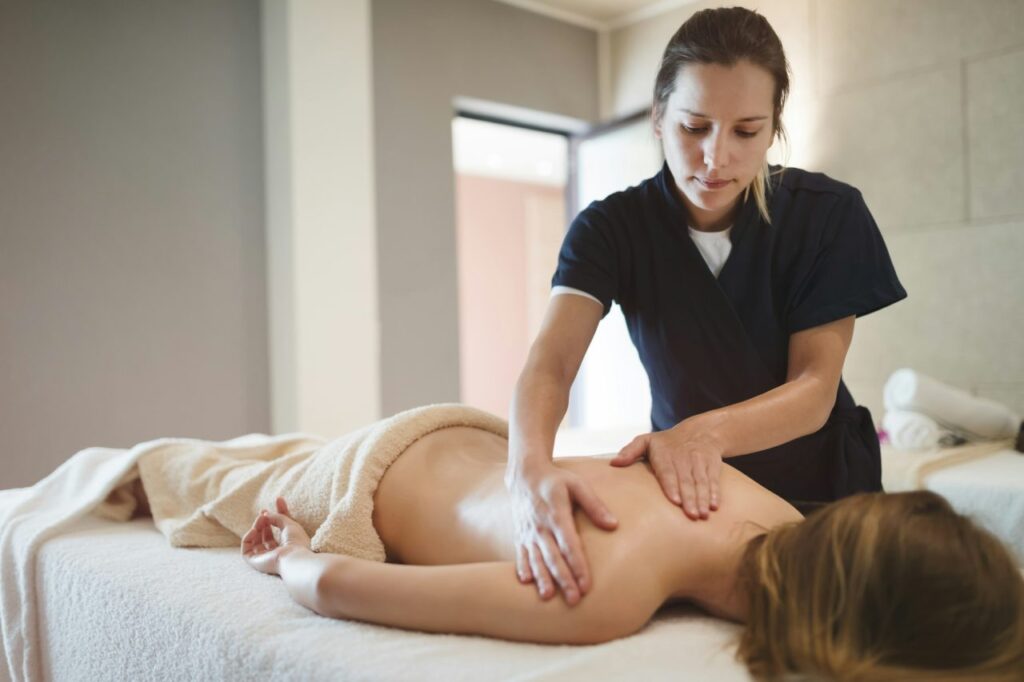
Some people find gentle massage relaxing when muscular tension accompanies back discomfort. Massage should not be used to diagnose an injury or replace medical assessment. Avoid forceful treatment over an acutely injured area, and seek professional advice first when pain is severe or accompanied by neurological or systemic symptoms.
When does back pain need urgent care?
Seek urgent medical assessment for back pain accompanied by new loss of bladder or bowel control, numbness around the groin or saddle area, major new weakness in the legs, significant trauma, or rapidly worsening neurological symptoms. Fever, serious illness, unexplained weight loss, a history of cancer, immune suppression or other significant medical circumstances can also warrant prompt evaluation.
When should you book a routine assessment?
Consider a healthcare assessment when pain is persistent, keeps returning, progressively worsens, significantly limits daily activities, or is accompanied by persistent numbness, tingling or pain travelling down a leg. A clinician can assess movement, neurological signs, history and whether further investigation is appropriate.
How to reduce future flare-ups
Build activity gradually, strengthen your body progressively, vary prolonged positions and use sensible lifting technique for the load and situation. Regular movement is generally more useful than searching for one perfect posture or one exercise that promises to prevent every episode.
Final takeaway
Lower back pain is common and often manageable, but symptoms should be interpreted in context. Stay gently active when appropriate, return to demanding activity gradually, and pay attention to neurological symptoms or other warning signs rather than trying to push through them.
Reviewed under the Tranquilla Spa Editorial Standards. This article is for general health and wellness information and is not medical advice.