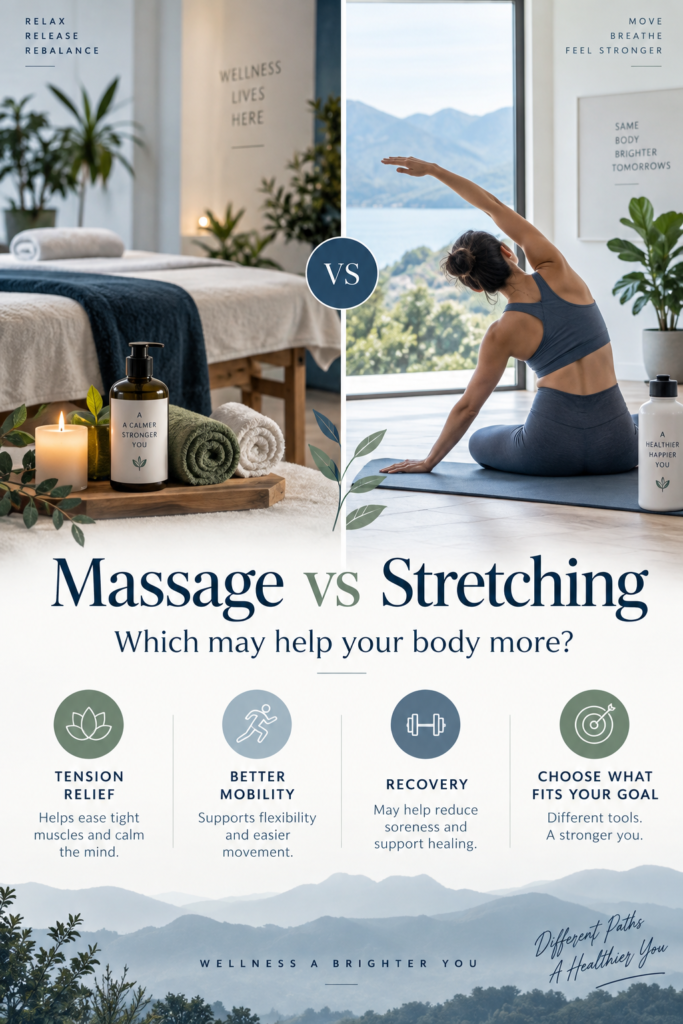
When muscles feel tight, many people wonder whether they should book a massage or start stretching. Both can help in the right situation, but they are not interchangeable. Massage is an external treatment that can reduce perceived tension and soreness, while stretching is an active self-management tool that can improve flexibility and movement tolerance over time.
The better choice depends on why you feel tight, how long the problem has lasted and what you want to achieve. This guide compares massage and stretching for recovery, flexibility, soreness and everyday stiffness.
Why muscles feel “tight”
Tightness is a sensation, not a diagnosis. It may follow long sitting, hard exercise, stress, poor sleep, repetitive work or reduced movement. A muscle can feel tight even when its actual length is normal. Sometimes the nervous system increases tension because an area is fatigued or sensitive.
This matters because stretching harder is not always the solution. Neither is pressing harder during massage.
What massage does
Massage applies pressure and movement to soft tissues. It can reduce perceived soreness, create relaxation and make an area feel temporarily looser. The effect may come from changes in sensation, local blood flow and nervous-system responses rather than physically “breaking up knots.”
Massage is passive: the therapist does the work while you receive the treatment.
What stretching does
Stretching exposes muscles and joints to a controlled end range. Repeated over time, it can increase flexibility and tolerance to lengthened positions. Stretching is active self-management because you can perform it independently and adjust intensity immediately.
For a deeper overview, read what daily stretching does to your body.
Which is better for post-workout soreness?
Massage may reduce the perception of delayed-onset muscle soreness for some people. Stretching can feel good, but it generally does not eliminate soreness. The most important recovery tools are appropriate training load, sleep, nutrition, hydration and time.
If you are very sore, choose gentle movement rather than intense stretching. Our muscle soreness recovery guide explains why.
Which is better for flexibility?
Stretching is the better tool for long-term flexibility because it directly trains range of motion. Massage can temporarily make movement feel easier but is unlikely to create the same lasting flexibility changes without movement practice. If flexibility is the goal, use massage for comfort and stretching or mobility for adaptation.
Which is better for stress?
Massage often has an advantage for immediate relaxation because the session is structured around rest, reduced stimulation and touch. Stretching can also be calming when done slowly with relaxed breathing. The key is preference: some people find touch deeply relaxing, while others prefer independent movement.
Which is better for desk-related tightness?
If your shoulders and hips feel tight after hours at a desk, either can help temporarily. But the root problem may be too much time in one position. Add frequent movement breaks, walking and strength work. A weekly massage cannot fully compensate for 50 hours of static sitting.
See what happens if you sit all day for practical prevention ideas.
Which is better for neck and shoulder tension?
Massage may provide short-term relief, while stretching can restore comfortable range. Strengthening the upper back and changing workstation habits are often needed for lasting improvement. If symptoms include arm weakness, numbness or severe radiating pain, seek medical evaluation rather than repeatedly treating the area with massage.
Can massage replace stretching?
No. Massage can support comfort, but it does not teach the body to actively control a larger range. If you need better movement for sport or daily life, include mobility and strength.
Can stretching replace massage?
For many people, yes. Massage is optional, not essential. If you enjoy it and can afford it, it can be a useful recovery tool. But a well-designed routine of activity, mobility, strength and sleep can support recovery without regular massage.
When to use massage first
Massage can be a good first choice when you are mentally stressed, feel generally tense, want passive relaxation or are too sore for active stretching. Keep pressure moderate when tissues are already sensitive. More force is not automatically better.
When to use stretching first
Stretching is a good first choice when you have a clear flexibility limitation, want to improve range over time or need a self-managed routine you can repeat frequently. Use gentle intensity and pair stretching with strength through the new range.
Combining massage and stretching
The two can complement each other. After massage, use light mobility rather than aggressive end-range stretching. On other days, perform a short flexibility routine and strength exercises. The goal is not to “keep muscles loose” every hour; it is to build a body that tolerates everyday demands.
A simple recovery plan
After a hard training day, take an easy walk, eat a balanced meal and prioritize sleep. If you enjoy massage, schedule a moderate session. The next day, use five to ten minutes of mobility and light stretching. Resume hard training when soreness and performance are returning toward normal.
What about foam rolling?
Foam rolling sits somewhere between self-massage and mobility. It can temporarily reduce the sensation of stiffness and may improve range for a short period. It is not required, and painful rolling is unnecessary. Use it if it helps you move comfortably.
Safety considerations
Avoid aggressive massage or stretching over acute injuries, unexplained swelling, bruising, recent fractures or skin infections. Stop stretching that causes numbness, tingling or sharp pain. People with blood-clot risk, bleeding disorders or recent surgery should ask a clinician before receiving deep massage.
Frequently asked questions
Should I massage or stretch before exercise?
Before exercise, dynamic mobility and a gradual warm-up are usually more useful than deep massage or long static stretching. Save longer passive techniques for later if they feel good.
Can massage make tight muscles permanently loose?
Massage can change sensation and comfort, but lasting movement changes usually require regular activity, mobility and strength.
Is stretching after massage safe?
Gentle stretching is usually fine if it feels comfortable. Avoid forcing range immediately after a deep session when tissues may feel sensitive.
Which is better for recovery?
Neither is essential. Sleep, nutrition, hydration and training load matter more. Massage and stretching are supportive tools.
Which option is more cost-effective?
Stretching has the obvious advantage of being free and repeatable at home. Once you know which movements are appropriate, you can practice them several times each week without scheduling or travel. Massage costs more but may provide a level of relaxation and hands-on comfort that self-stretching cannot reproduce. For many people, the most cost-effective strategy is to make movement and stretching the foundation, then use massage selectively when stress, travel or heavy training makes it especially valuable.
How to combine both across a week
Use mobility or stretching for five to ten minutes on most days, especially around areas that genuinely limit movement. Add strength training two or more times per week as appropriate. If you book a massage, schedule it on an easier training day and keep the next several hours relatively relaxed. The following day, return to normal movement rather than trying to preserve a “loose” feeling by avoiding activity.
Bottom line
Massage is best viewed as a relaxation and short-term comfort tool; stretching is better for building flexibility over time. Tight muscles often need more than either one. Combine movement, strength, sleep and sensible training progression, then use massage or stretching according to what makes you feel and function better. Neither tool is mandatory, and neither replaces gradual physical conditioning.