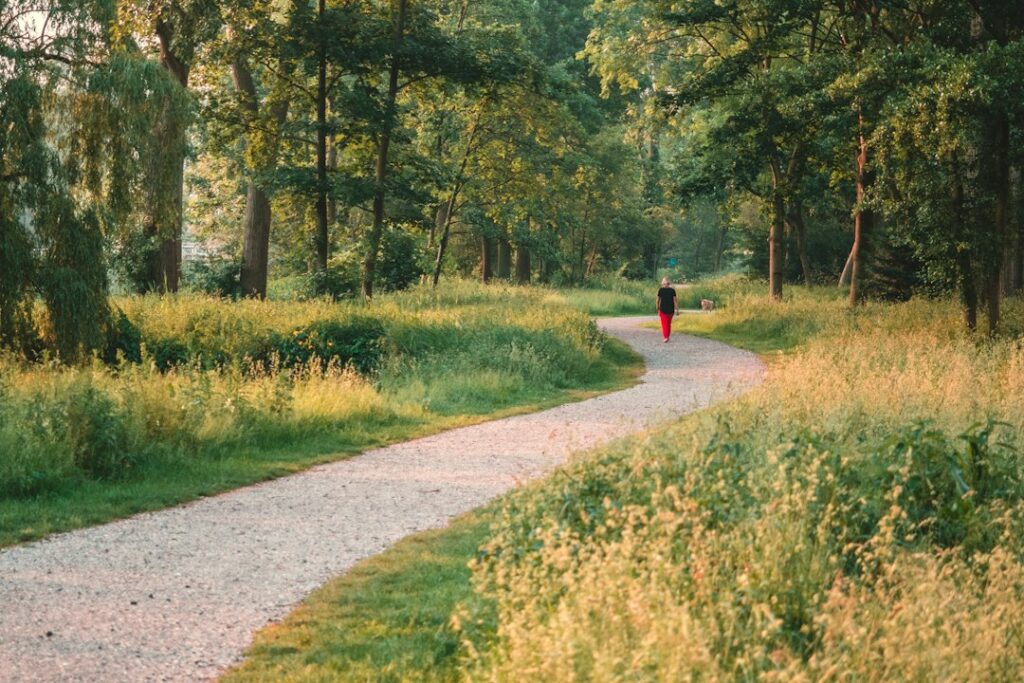
Many people stretch automatically before walking, but a better approach is usually to warm up first and save longer static stretches for after the walk or another time.
Before walking: focus on movement
Start with a few minutes of easy walking and simple dynamic movements such as ankle circles, gentle leg swings, or marching in place. The goal is to increase temperature and prepare the joints for movement.
After walking: stretch if it feels useful
After the walk, gentle calf, hamstring, hip flexor, and quadriceps stretches can feel good. Stretching is optional, not a requirement for every walk.
Do not force range
A stretch should create mild tension, not sharp pain. Bouncing or forcing a deep position is unnecessary.
What matters more than stretching?
Gradual increases in walking distance, comfortable footwear, strength, and regular movement have a bigger impact on walking tolerance than a long stretching routine.
If you are working on a walking habit, see walking 30 minutes a day.
What is the difference between warming up and stretching?
A warm-up prepares you for the activity you are about to do. For walking, that usually means gradually increasing movement and pace. Stretching, especially static stretching where you hold one position, is different. It focuses more on range of motion and the sensation of muscle tension.
Because walking itself is relatively low intensity, the warm-up can be simple. You do not need a long routine. A few minutes of easy walking followed by a gradual increase in pace is enough for many people.
Why dynamic movement works well before a walk
Dynamic movements take joints through a comfortable range without holding the end position for long. This can help you feel less stiff before setting off, particularly first thing in the morning or after sitting for hours.
- March gently in place for 30–60 seconds.
- Make small ankle circles.
- Perform a few controlled heel raises.
- Use gentle leg swings while holding a stable support.
- Take several slow bodyweight sit-to-stands if comfortable.
Keep the movements easy. A warm-up should make you feel more ready, not tired before the walk begins.
Do you need to stretch before every walk?
No. If you feel comfortable after a few easy minutes of walking, there is no requirement to stop and stretch. Many regular walkers simply begin slowly, then settle into their normal pace.
If a specific area feels persistently restricted, a targeted mobility or strength plan may be more useful than repeating the same stretch before every walk.
Can static stretching before walking reduce performance?
Very long or intense static stretching immediately before demanding exercise can temporarily reduce force or power in some situations. For an ordinary walk, this effect is unlikely to be a major concern, but it is another reason not to spend a long time forcing deep stretches before moving.
If you enjoy a brief gentle stretch before walking and it feels good, you do not need to avoid it. The key is not to treat stretching as mandatory or push to an extreme range.
What should you stretch after walking?
If stretching feels useful after a walk, focus on areas that did most of the work. Common options include the calves, front of the thighs, hamstrings, and hip flexors. Hold a mild stretch for a comfortable period and breathe normally.
You do not need to stretch every muscle. Choose two or three areas that feel tight and stop if you feel sharp pain, numbness, or joint pinching.
How long should you hold a stretch?
There is no single required duration for every person. A gentle hold of roughly 15–30 seconds is practical for many adults, and you can repeat it once or twice if it feels comfortable. Longer is not automatically better.
The goal is to improve or maintain comfortable range of motion over time, not to create the strongest possible sensation in one session.
Stretching vs mobility
Stretching usually targets the ability of muscles and tissues to tolerate lengthened positions. Mobility includes control of movement through a range and often combines flexibility with strength and joint motion.
For walkers, mobility may be especially useful when the problem is not simply “tightness” but difficulty controlling the hips, ankles, or knees through normal walking movements. Our stretching vs mobility guide explains the difference in more detail.
What if your calves feel tight after walking?
Calf tightness may reflect increased walking volume, hills, faster pace, or simply fatigue. A gentle calf stretch can feel good, but also look at your training load. If you recently doubled your distance or added steep hills, reducing the load temporarily may help more than aggressive stretching.
What if your hamstrings always feel tight?
A constant sensation of hamstring tightness does not necessarily mean the muscles need deeper stretching. Strength, nerve sensitivity, lower-back issues, and prolonged sitting can all influence the feeling. If stretching never changes the problem, consider a broader assessment rather than assuming you need more flexibility.
Can stretching prevent soreness?
Stretching may feel comfortable, but it does not reliably prevent all post-exercise muscle soreness. Gradual progression, adequate recovery, sleep, nutrition, and sensible training load are more important. If you are sore after activity, see our muscle soreness recovery guide.
Can stretching prevent injury?
No single stretching routine can guarantee injury prevention. Injury risk depends on training load, previous injury, strength, fatigue, terrain, footwear, and many other factors. A good walking program includes gradual progression and enough recovery, not only stretching.
A simple five-minute pre-walk warm-up
- Walk slowly for one minute.
- Do 10 controlled heel raises.
- March in place for 30 seconds.
- Perform five gentle leg swings on each side while holding support.
- Walk another two minutes, gradually increasing pace.
If you already feel ready after step one or two, you can simply continue walking.
A simple post-walk routine
- Slow the final two minutes of the walk rather than stopping suddenly.
- Take a few relaxed breaths.
- Stretch the calves gently if they feel tight.
- Add a thigh or hip-flexor stretch if useful.
- Drink according to thirst and continue normal movement afterward.
What matters more for comfortable walking?
Consistent walking, sensible progression, adequate strength, and recovery usually matter more than whether you stretch at exactly the right moment. If you are building from a low activity level, increase time or distance gradually and avoid changing pace, hills, and distance all at once.
Our walking for beginners guide and daily walking habit guide can help you build a sustainable routine.
Frequently asked questions
Is it bad to stretch cold muscles?
Gentle stretching is not automatically dangerous, but many people find stretching more comfortable after a few minutes of movement. Avoid forcing deep positions when you feel cold or stiff.
Should older adults stretch before walking?
Older adults can benefit from a gradual warm-up and comfortable mobility work. The routine should match balance, joint health, and fitness. Holding a stable support may make dynamic movements safer.
Should I stretch if I have knee or hip pain?
Only if the stretch is comfortable and does not aggravate symptoms. Persistent joint pain deserves assessment rather than repeatedly stretching through it.
Can I walk without any warm-up?
Yes, especially for easy walking. Starting the first few minutes at a slower pace is itself a warm-up.
If a routine feels good, is easy to repeat, and does not increase pain, it is usually a reasonable choice.
Simple and comfortable usually wins.
Consistency matters more than perfection.
Bottom line
Warm up with movement before walking. Use gentle static stretches afterward if they help you feel more comfortable.