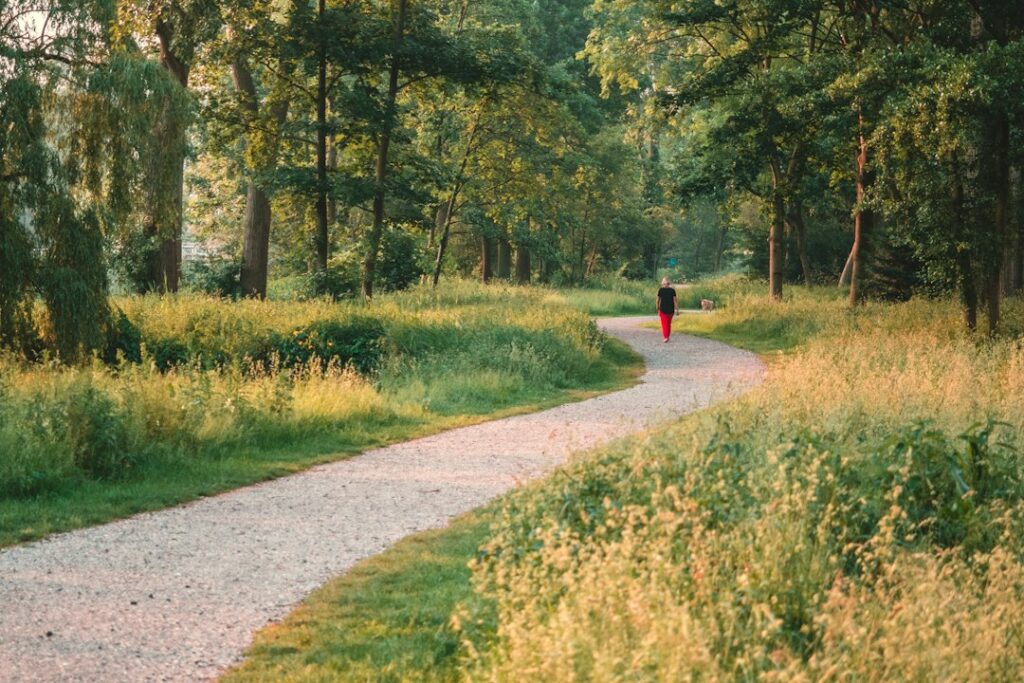
A walk after dinner is a simple way to add movement to the evening without needing a formal workout. For many people, 10–30 minutes at a comfortable pace is enough.
How long should the walk be?
If you are new to post-meal walking, start with 10 minutes. If that feels easy, build toward 20–30 minutes. Longer is not always better; consistency matters more than pushing duration.
When should you start?
A gentle walk can usually begin soon after eating. If the meal was very large or you are prone to reflux, wait a little longer and keep the pace easy.
How hard should you walk?
Use a relaxed to brisk pace that lets you talk comfortably. Avoid turning the walk into a hard workout immediately after a heavy meal.
Possible benefits
Post-dinner walking can help you accumulate daily activity, reduce the amount of time spent sitting, and may support healthier post-meal blood sugar responses. Some people also find it helps them feel less sluggish after eating.
Will it improve sleep?
Gentle evening activity is generally compatible with good sleep. Very intense exercise close to bedtime can feel stimulating for some people, so keep the walk easy if you are walking late.
For more detail, see our guide to walking after eating and our article on walking 30 minutes a day.
When to be cautious
If you develop chest pain, marked shortness of breath, dizziness, or unusual weakness while walking, stop and seek medical advice.
Why a short walk after dinner can be useful
Dinner is often followed by the longest sitting period of the day. A short walk changes that pattern by adding light activity when many people would otherwise move straight from the table to the sofa. The benefit is not that dinner walking is uniquely powerful; it is that it is easy to attach to an existing daily event.
Light post-meal movement can also support the way your body handles glucose after eating. Your working muscles use glucose for energy, so even gentle activity can be useful. That does not mean a walk replaces medication, dietary advice, or medical care for diabetes. It is simply one practical lifestyle habit that may complement an overall plan.
Is 10 minutes enough?
Yes. A 10-minute walk is a realistic starting point and can be especially useful if you are new to regular exercise, have limited time, or feel too full for a longer session. Once the habit feels automatic, you can decide whether to extend it to 15, 20, or 30 minutes.
Short walks also add up. If you walk for 10 minutes after breakfast, lunch, and dinner, you have accumulated 30 minutes of movement without scheduling one long workout. This approach works well for people who dislike long exercise sessions or have busy days.
Is 30 minutes better than 10?
A longer walk increases total activity and energy expenditure, but “better” depends on what you can repeat. A 30-minute walk that happens once a week may contribute less to your routine than a 10- or 15-minute walk you complete most evenings. Build duration only when it fits comfortably into your life.
If your broader goal is to increase daily activity, see our guide on walking 30 minutes a day.
How soon after dinner should you walk?
Many people are comfortable taking an easy walk within a few minutes of finishing dinner. Others prefer to wait 10–30 minutes, particularly after a large meal. There is no need to rush outside the moment you put down your fork.
If you experience reflux, abdominal discomfort, nausea, or cramping, experiment with a slower pace, shorter duration, or a little more time between the meal and the walk. Persistent digestive symptoms deserve proper assessment rather than assuming that walking timing is the only cause.
What pace is best after dinner?
Use a pace that feels purposeful but comfortable. You should be able to talk in full sentences. The goal for most post-dinner walks is not maximum fitness intensity; it is to move, interrupt sitting, and build a repeatable routine.
If you already have a good fitness base, you can make some walks brisker, but there is usually no reason to turn every after-dinner walk into interval training. Our brisk walking guide explains how to judge intensity using the talk test and perceived effort.
Can walking after dinner help with weight management?
It can contribute, mainly by increasing total daily activity. Weight management still depends on the bigger picture: overall food intake, activity, sleep, stress, and consistency over time. A short walk does not “cancel out” a large meal, and it is more useful to think of the habit as part of a healthy routine than as compensation for eating.
If weight management is one of your goals, our walking for weight loss guide covers weekly volume, pace, and progression.
Can an evening walk improve sleep?
For many people, gentle evening walking fits comfortably into a healthy sleep routine. It may provide a transition between the busy part of the day and bedtime, especially when the walk is calm and not overly strenuous. Some people find very intense late exercise stimulating, so if you notice that hard evening workouts delay sleep, keep post-dinner walking easy.
Sleep is influenced by many factors, including light exposure, caffeine, stress, schedule, and the sleep environment. Walking can support a healthy routine, but it is not a treatment for persistent insomnia. For sleep-specific habits, read our sleep hygiene guide.
What if the weather is bad?
You can still keep the habit. Walk indoors at a mall, use a treadmill, climb stairs gently, walk laps around your home, or spend 10 minutes doing light movement instead. The important part is the movement pattern, not the location.
How to make the habit stick
- Choose a minimum duration you can manage even on busy days, such as 10 minutes.
- Keep walking shoes visible near the door.
- Link the walk directly to clearing the dinner table.
- Invite a family member or use the time for an easy phone call.
- Track consistency rather than calories burned.
- Keep a shorter indoor option for bad weather.
If consistency is difficult, our guide on building a daily walking habit gives practical cue-and-routine strategies.
Frequently asked questions
Should I walk before or after dinner?
Both can be useful. Walking after dinner has the advantage of adding movement after a meal and breaking up evening sitting, while walking before dinner may fit better if you prefer exercising before eating.
Can I walk after a heavy meal?
You can, but keep the pace gentle and consider waiting longer if you feel overly full. Comfort should guide the timing.
Do I need to walk every night?
No. Regularity matters more than perfection. Start with several evenings per week and build from there if the habit suits you.
Is walking after dinner safe for older adults?
For many older adults, walking is an accessible form of activity. The safest duration and pace depend on balance, fitness, medications, and health conditions. Use a stable route, adequate lighting, and appropriate footwear, and seek individual advice when needed.
A simple 7-day starting plan
For the first week, keep the goal intentionally small. Walk for 10 minutes after dinner on three evenings. On two other evenings, add only a five-minute indoor walk or light movement if you are busy. Use the remaining days for normal activity or rest. At the end of the week, notice which timing felt easiest, whether the pace was comfortable, and what usually stopped you from going. Then adjust the next week rather than forcing a rigid target.
This gradual approach helps turn the walk into a routine instead of a short-lived challenge. Once 10 minutes feels automatic, add five minutes to one or two walks at a time.
Bottom line
For most people, 10–30 minutes after dinner is a practical target. Start small, keep the pace comfortable, and make the habit easy enough to repeat.