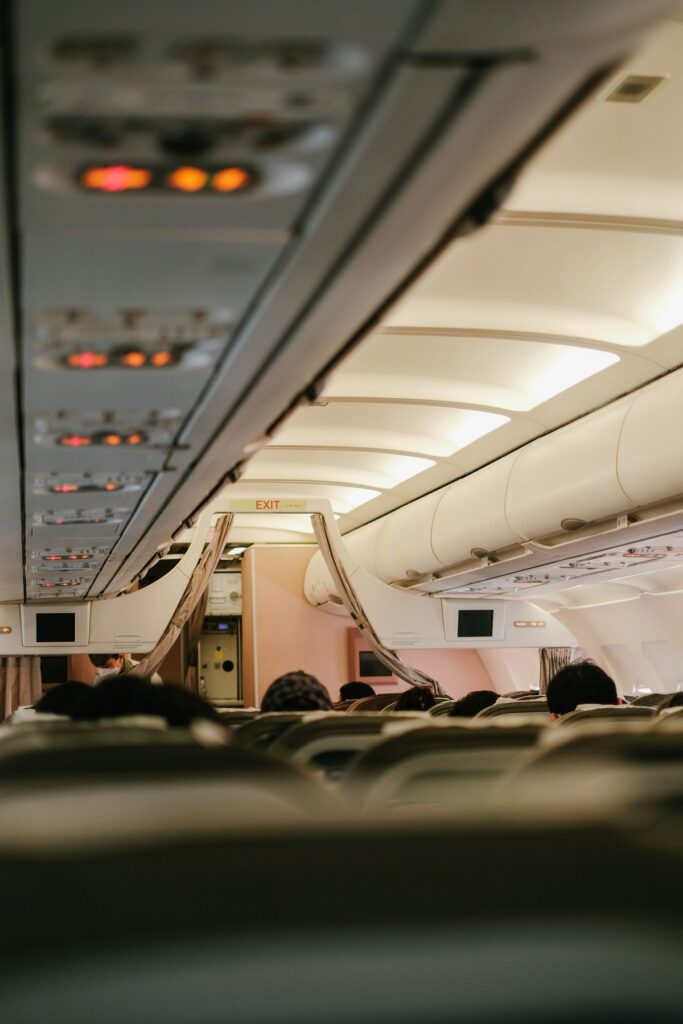
Looking down after a long flight and seeing puffy feet or sock marks around the ankles can be alarming. Fortunately, mild swelling in both feet and ankles after hours of sitting is common. Gravity and reduced leg movement allow fluid to collect in the lower legs, especially during long-haul travel.
Most simple travel-related swelling improves after walking and returning to normal activity. However, swelling mainly in one leg—particularly with pain, warmth, or redness—can be a sign of deep vein thrombosis (DVT), a blood clot that requires urgent medical assessment. This guide explains the difference.
Why do feet swell on airplanes?
When you sit for a long time, the calf muscles contract less frequently. These muscles normally help move blood and fluid back toward the heart. With prolonged immobility, more fluid can pool in the lower legs and ankles.
Cabin pressure, salt intake, heat, tight clothing, certain medications, pregnancy, and underlying heart, kidney, liver, or circulation problems can also influence swelling.
What does normal post-flight swelling look like?
Typical mild travel swelling tends to affect both ankles or feet, is not severely painful, and improves after you walk, elevate the legs, or sleep. Your shoes may feel tighter and socks may leave deeper marks than usual.
If the swelling is new, severe, persistent, or very unequal between legs, do not assume it is routine.
1. Walk as soon as practical
Walking activates the calf muscles and supports circulation. After landing, avoid sitting for several more hours if you can. Walk through the terminal, around the hotel, or outside at an easy pace.
During future long flights, stand and walk periodically when the seat-belt sign is off and it is safe to do so.
2. Move the ankles while seated
Even when you cannot leave the seat, ankle movement can help. Point the toes, pull them toward you, make circles, and perform gentle calf contractions. Repeat regularly rather than waiting until the legs feel very stiff.
3. Elevate the legs after arrival
Lie down and support the legs so the feet are comfortably elevated for 15 to 30 minutes. This can help reduce mild dependent swelling. You do not need to put the legs straight up against a wall unless that position is comfortable.
4. Drink fluids normally
Staying reasonably hydrated supports overall travel comfort, but drinking excessive water will not instantly remove swelling. Drink according to thirst and conditions. Limit excessive alcohol, which can worsen dehydration and disrupt sleep.
5. Avoid very tight clothing
Clothing that strongly compresses the waist, groin, or legs can be uncomfortable during long travel. Choose comfortable layers and shoes that allow for a small amount of swelling.
6. Consider compression socks when appropriate
Graduated compression stockings can reduce lower-leg swelling and are sometimes recommended for travelers at increased risk of blood clots. Correct sizing and compression level matter. People with certain arterial circulation problems should not use them without professional advice.
If you have a previous DVT, recent surgery, active cancer, pregnancy, a known clotting disorder, or another risk factor, ask your doctor what prevention is appropriate before long-distance travel.
Can you massage swollen feet after flying?
Gentle foot massage may feel relaxing when swelling is mild, equal on both sides, and clearly related to long sitting. However, do not massage a leg when a blood clot is possible. A painful, warm, swollen calf or significant one-sided swelling needs medical assessment first.
How long should flight swelling last?
Simple dependent swelling often improves within hours after you resume normal movement and elevate the legs. It may take longer after a very long journey or in hot weather.
Swelling that persists into the next day without improvement, repeatedly occurs without an obvious reason, or is accompanied by other symptoms deserves medical advice.
What is deep vein thrombosis?
DVT is a blood clot in a deep vein, often in the leg. Long periods of immobility can increase risk because blood flow slows. Most travelers will never develop a DVT, but the condition is important because part of a clot can break off and travel to the lungs, causing a pulmonary embolism.
DVT warning signs
Seek urgent medical assessment if you develop:
- swelling mainly in one leg
- calf or thigh pain or tenderness
- warmth in the affected area
- red or discolored skin
- unexplained leg heaviness or tightness that is clearly one-sided
Not everyone with DVT has obvious symptoms, which is why individual risk factors also matter.
Pulmonary embolism warning signs
Call emergency services for sudden shortness of breath, chest pain—especially pain worse with breathing—coughing blood, fainting, or a rapid unexplained heartbeat after travel. These can be signs of a pulmonary embolism.
Who has higher risk during long flights?
Risk can be higher with previous blood clots, recent surgery or injury, active cancer, pregnancy or the postpartum period, estrogen-containing medications, older age, obesity, limited mobility, and certain inherited clotting disorders. The total risk depends on the combination of factors and flight duration.
If you know you are high risk, prevention should be planned before the trip rather than improvised after landing.
Does aspirin prevent flight-related DVT?
Do not start aspirin or another medication solely for travel-clot prevention without medical advice. Aspirin can cause bleeding and is not the right preventive strategy for everyone. Some high-risk travelers may need prescription anticoagulation, but that decision belongs with a healthcare professional.
How to reduce swelling on your next flight
- Choose an aisle seat if it helps you move more often.
- Stand and walk periodically when safe.
- Do ankle pumps and calf contractions in your seat.
- Wear comfortable clothing and shoes.
- Drink fluids regularly.
- Keep alcohol modest.
- Use properly fitted compression stockings if they are appropriate for you.
- Discuss individual DVT prevention with your doctor if you have risk factors.
What if you have heart, kidney, or liver disease?
Swelling may have causes unrelated to the flight, and fluid management can be more complex. Follow your clinician’s advice about fluids, medications, compression, and travel. Do not change diuretics or other medicines on your own.
The bottom line
Mild swelling in both feet after a long flight is common and usually improves with walking, elevation, and time. The important distinction is one-sided or severe swelling, especially with calf pain, warmth, or redness. Those symptoms require medical assessment because of the risk of DVT. Chest pain or sudden shortness of breath after travel is an emergency.
Sources and further reading
This article is general travel-health education and does not replace individual medical advice.