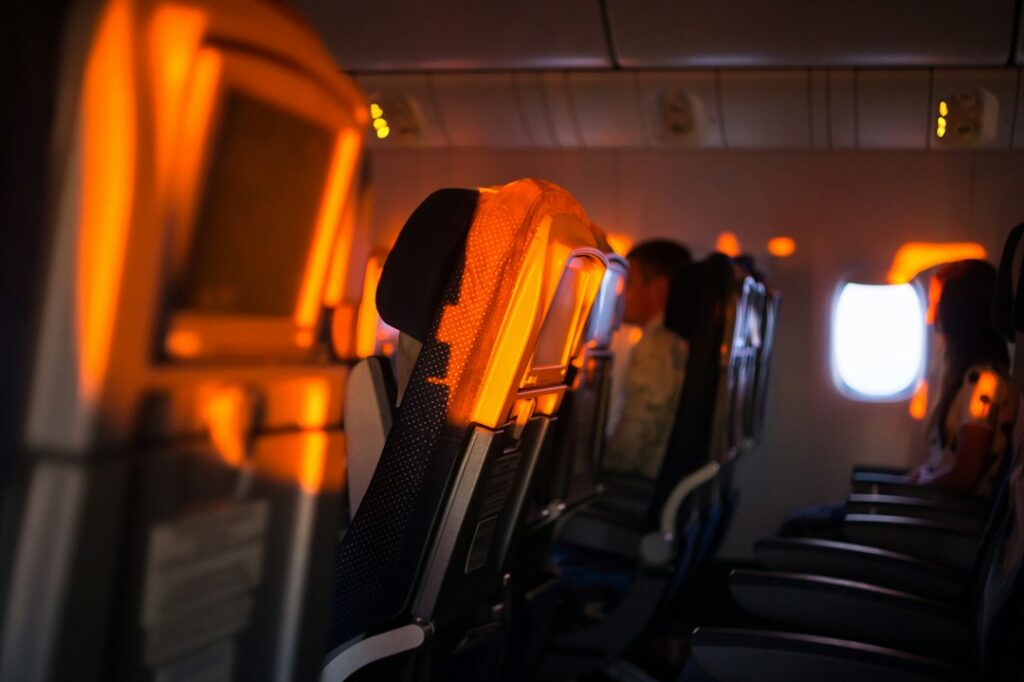
Aircraft cabins are dry environments, so long flights can leave skin, lips and eyes feeling less comfortable. You cannot change cabin humidity, but a simple routine can reduce dryness without carrying a complicated skincare kit.
Moisturize before boarding
Apply a fragrance-free moisturizer to slightly damp skin before the flight. Creams and ointments generally reduce water loss better than very light lotions. Lip balm can help with dry lips.
Keep the routine simple
A long flight is not the ideal time to test strong acids, retinoids or unfamiliar products. Irritation plus dry cabin air may make skin feel worse. If you cleanse during the trip, use a gentle product and moisturize afterward.
Hydration helps comfort, not instant skin moisture
Drinking normally through the flight supports general hydration, but drinking excessive water will not directly fix dry skin. See our long-flight hydration guide.
Protect your eyes and lips
Contact lenses may feel dry in cabin air. Follow your eye-care professional’s advice and consider glasses if lenses become uncomfortable. Avoid rubbing dry eyes aggressively.
After landing
Use a gentle cleanser if needed and reapply moisturizer. If skin becomes red, cracked, painful or develops a persistent rash, a dermatologist can help identify whether eczema, allergy or another condition is involved.
The best flight skincare routine is usually the one with the fewest surprises: gentle cleansing, moisturizer, lip protection and normal hydration.
Why airplane cabins feel so drying
Commercial aircraft cabins usually have much lower humidity than many homes and offices. In a dry environment, water evaporates from the skin surface more easily, and people who already have dry or sensitive skin may notice tightness, flaking or irritation sooner. Lips and the skin around the nose can feel especially uncomfortable because they are exposed continuously to the cabin air.
This does not mean the skin is becoming dangerously dehydrated. For most healthy travelers, the issue is temporary surface dryness and discomfort. A protective skincare routine is more useful than trying to drink extreme amounts of water.
What to pack in your personal item
- A small fragrance-free moisturizer that you have used before.
- A simple lip balm or petrolatum-based ointment.
- A gentle hand cream if your hands become dry after repeated washing.
- Your usual eye drops if recommended by an eye-care professional.
- A travel-size gentle cleanser only if you expect to need it.
Keep products within airport security liquid limits and avoid transferring prescription creams into unlabelled containers if you may need to explain them during travel.
Should you use a sheet mask on the plane?
A sheet mask can feel cooling, but it is not necessary for preventing dry skin. Fragrances, preservatives or unfamiliar ingredients can also irritate sensitive skin. If you enjoy using one and already know your skin tolerates the product, it is mainly a comfort choice rather than a requirement.
A familiar moisturizer applied before boarding and again when needed is simpler and usually easier to manage in a shared cabin.
What about facial mists?
A mist can feel refreshing, but spraying water onto the skin without applying an emollient afterward may provide only brief relief. If you use a mist, follow it with your usual moisturizer when practical. Avoid strongly scented sprays that may bother nearby passengers.
Hands can become dry too
Frequent handwashing and alcohol-based sanitizer can leave hands feeling rough during a long travel day. Continue good hand hygiene, but use hand cream after washing when your skin feels dry. If you have eczema or another chronic skin condition, travel with the products your clinician has recommended rather than experimenting with new formulas in transit.
Should you skip makeup?
You do not have to avoid makeup on a flight, but a long travel day may be more comfortable with a simpler routine. If your skin tends to become dry, consider lighter products and avoid repeatedly cleansing and reapplying makeup during the journey. Removing makeup gently before an overnight flight can also make it easier to moisturize.
A simple pre-flight and post-flight routine
Before boarding
Cleanse gently if needed, apply moisturizer while the skin is slightly damp and protect the lips. Sunscreen still matters during the travel day, especially before and after the flight and when you will be exposed to daylight through airports, ground transport or your destination.
During the flight
Reapply lip balm and moisturizer when your skin feels tight. Avoid picking at flaky skin or over-cleansing. Drink normally and keep alcohol moderate because it may worsen how tired and dry you feel even though it is not the only cause of skin dryness.
After landing
Return to your normal skincare routine. A gentle cleanse, moisturizer and adequate sleep are usually enough. If your skin is irritated, delay strong exfoliating acids or retinoids until it feels settled again.
When dryness may need medical advice
Temporary tightness or mild flaking after a flight is common. Seek professional advice if you develop significant swelling, blistering, severe pain, signs of infection, a widespread rash or persistent symptoms that do not improve after returning to your usual environment. Travelers with eczema, psoriasis or severe allergies may benefit from planning ahead with their clinician.
Bottom line
You cannot make an aircraft cabin humid, but you can reduce discomfort. Use products your skin already tolerates, moisturize before boarding, protect the lips and hands, avoid unnecessary irritation and return to your normal routine after landing. Simple and familiar usually works better than turning a long flight into an elaborate skincare experiment.