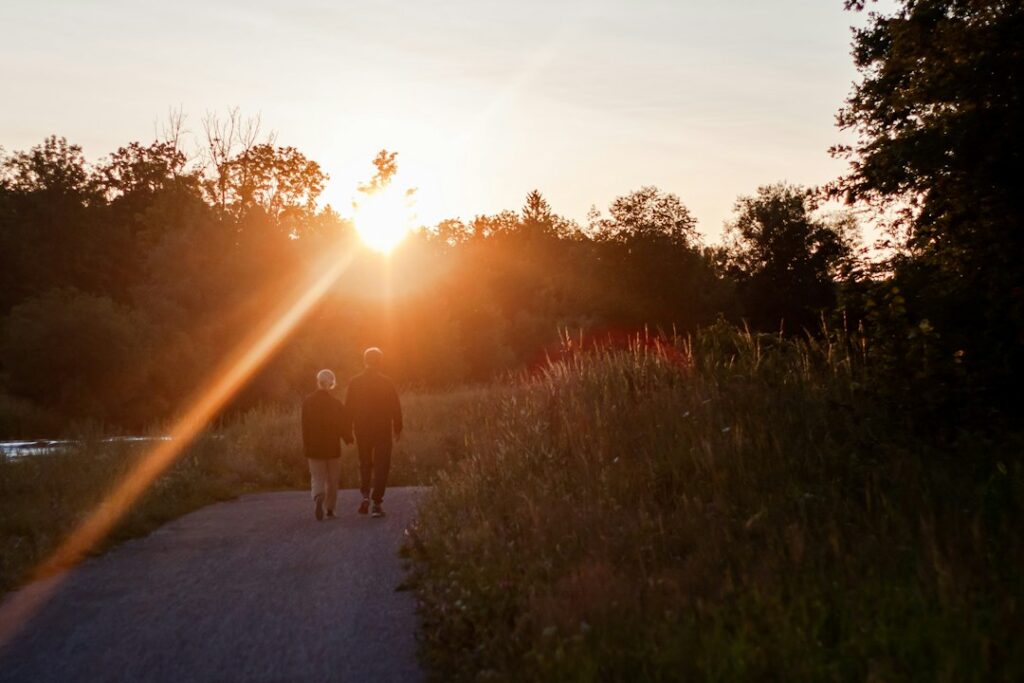
Morning light is one of the strongest environmental signals that helps set your circadian rhythm, the roughly 24-hour timing system that influences sleep, alertness, hormones and body temperature. Getting outdoor light soon after waking can help reinforce a consistent wake time and may make it easier to feel sleepy at an appropriate hour later.
Why morning light matters
Your eyes detect light and send timing information to the brain’s central clock. Bright light in the morning generally shifts the body clock earlier, while strong light late at night can push it later. This is one reason irregular sleep schedules and bright screens at night can make bedtime drift.
How much morning light do you need?
There is no universal minute target because light intensity varies with season, latitude, weather and whether you are indoors or outdoors. Outdoor daylight is usually much brighter than normal indoor lighting, even on cloudy days. A practical approach is to spend some time outside in the morning as part of a walk, commute or breakfast routine.
You do not need to stare at the sun, and you should never look directly at it. Normal outdoor exposure is enough to provide a strong light signal.
What if you wake before sunrise?
Use normal indoor lighting when you wake, then get outside once daylight is available. People with significant circadian-rhythm disorders may benefit from structured bright-light therapy, but timing is important and professional guidance can be useful because poorly timed bright light can shift the clock in the wrong direction.
Pair light with a consistent schedule
Morning light works best alongside regular sleep and wake times. If your schedule has drifted, see our guide on resetting your sleep schedule. Also consider evening habits such as dimming lights and reducing stimulating activity before bed.
Who should be cautious with light therapy?
If you have bipolar disorder, certain eye diseases or take medications that increase light sensitivity, ask a healthcare professional before using a bright-light box. Ordinary outdoor morning light is generally a normal part of daily life, but therapeutic devices can be much more intense.
Morning daylight is not a cure for insomnia, but as part of a consistent routine it can be a powerful cue that helps your body distinguish day from night.